The people of Azerbaijan are the heart and soul of a nation that bridges Europe and Asia, where ancient traditions meet modern influences. With a rich cultural heritage, a deep history, and a diverse society, the people of Azerbaijan offer a fascinating glimpse into a unique way of life. This article provides an in-depth look at the Azerbaijani people, exploring their culture, history, demographics, and the significant contributions they have made to the world.
Who are the Azerbaijani People?
The Azerbaijani people, also known as Azeris, are the majority ethnic group in Azerbaijan, a country located in the South Caucasus region, bordered by the Caspian Sea, Russia, Georgia, Armenia, and Iran.
- Ethnic Identity: The Azerbaijani people are primarily Turkic-speaking and share cultural and historical ties with other Turkic peoples. They have a strong sense of national identity, shaped by their language, traditions, and history.
- Language: Azerbaijani, or Azeri, is the official language of Azerbaijan and is spoken by the majority of the population. It belongs to the Turkic language family and is closely related to Turkish and other Turkic languages.
- Religion: Islam, particularly Shia Islam, is the predominant religion among Azerbaijanis, with a significant Sunni minority. Religion plays a key role in their cultural and social practices, although Azerbaijan is known for its secular governance.
A Brief History of the Azerbaijani People
The history of the Azerbaijani people is a story of resilience, adaptation, and cultural synthesis. Their history is marked by periods of independence, foreign domination, and a rich cultural evolution.
- Ancient Roots: The region now known as Azerbaijan has been inhabited since ancient times. It was part of various empires, including the Persian Empire, and was influenced by Zoroastrianism, Christianity, and Islam over the centuries.
- Medieval Period: During the medieval period, Azerbaijan became a significant cultural and economic center, with cities like Baku and Ganja flourishing as hubs of trade and learning.
- Safavid Empire: The Safavid Empire, founded in the early 16th century, had a profound impact on Azerbaijani culture and identity. The empire established Shia Islam as the dominant religion in the region, a legacy that continues to this day.
- Russian and Soviet Rule: In the 19th century, Azerbaijan became part of the Russian Empire and later the Soviet Union. During Soviet rule, Azerbaijanis experienced significant cultural and economic changes, including industrialization and urbanization.
- Independence: Azerbaijan declared its independence from the Soviet Union in 1991. Since then, the country has navigated the challenges of nation-building, economic development, and regional conflicts.
Cultural Heritage and Traditions
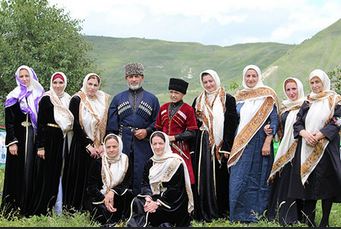
The culture of the Azerbaijani people is a vibrant tapestry woven from various influences, including Persian, Turkic, Russian, and Islamic traditions.
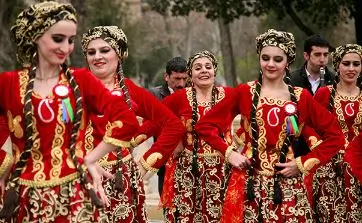
- Music and Dance: Azerbaijani music is renowned for its rich melodies and complex rhythms. The traditional mugham, a form of classical music, is a UNESCO-recognized cultural heritage. Folk dances, such as the energetic Yalli, are an integral part of Azerbaijani celebrations.
- Cuisine: Azerbaijani cuisine reflects the country’s diverse geography and cultural influences. It features a variety of dishes, including kebabs, pilafs, and dolmas. The use of fresh herbs, spices, and fruits is a hallmark of Azerbaijani cooking.
- Carpets: Azerbaijani carpets are famous worldwide for their intricate designs and craftsmanship. Carpet weaving is a centuries-old tradition in Azerbaijan, with each region having its distinctive patterns and techniques.
- Literature and Poetry: Azerbaijani literature has a rich history, with poets like Nizami Ganjavi and Khurshidbanu Natavan making significant contributions. Modern Azerbaijani literature continues to thrive, exploring themes of identity, history, and social change.
Demographics and Society
Azerbaijan is a diverse society with a population that includes various ethnic and religious groups.
- Population: As of recent estimates, Azerbaijan has a population of approximately 10 million people. The majority are ethnic Azerbaijanis, but the country is also home to several minority groups, including Lezgins, Talysh, Russians, and Armenians.
- Urbanization: Azerbaijan has experienced significant urbanization in recent decades, with Baku, the capital, emerging as a major economic and cultural center. However, rural traditions and lifestyles remain strong in many parts of the country.
- Education and Literacy: Education is highly valued in Azerbaijani society. The literacy rate is nearly 100%, and there is a strong emphasis on higher education and professional development.
- Women in Society: Women in Azerbaijan have made significant strides in education, employment, and public life. However, traditional gender roles still influence many aspects of social and family life.
Azerbaijanis in the Global Context
The Azerbaijani diaspora is spread across the world, with significant communities in Russia, Turkey, Iran, and the United States.
- Contributions to Global Culture: Azerbaijanis have made notable contributions to global culture, science, and the arts. Figures like the composer Uzeyir Hajibeyov, who created the first opera in the Islamic world, and Garry Kasparov, the world chess champion, have brought international recognition to Azerbaijan.
- Diplomacy and International Relations: Azerbaijan plays a key role in regional diplomacy and energy politics, thanks to its strategic location and vast oil and gas reserves. The country maintains active diplomatic relations with many nations and is a member of international organizations like the United Nations and the Non-Aligned Movement.
The people of Azerbaijan are a testament to the enduring spirit of a nation that has navigated centuries of change, challenge, and cultural evolution. From their rich traditions in music, dance, and literature to their contributions to global culture and diplomacy, Azerbaijanis continue to shape the world in meaningful ways. Understanding the history, culture, and society of the Azerbaijani people provides valuable insights into a nation that stands at the crossroads of East and West, tradition and modernity.