Ibn al-Haytham: The Father of Optics and Pioneer of Scientific Method
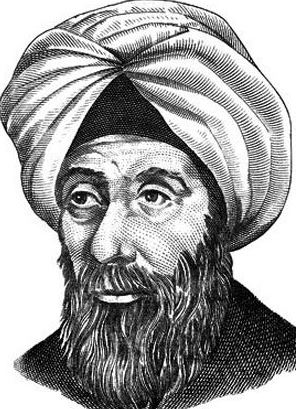
Ibn al-Haytham (965–1040), also known as Alhazen in the Western world, was a renowned Arab scientist whose groundbreaking work in optics, mathematics, and scientific methodology has earned him a lasting legacy. Often hailed as the “Father of Optics,” Ibn al-Haytham’s contributions laid the foundation for modern optical science and greatly influenced the development of the scientific method. This article delves into the life, achievements, and impact of Ibn al-Haytham.
Early Life and Education
Ibn al-Haytham was born in Basra, present-day Iraq, in 965. His full name was Abu Ali al-Hasan ibn al-Haytham. Growing up in a thriving intellectual environment, he was exposed to the rich tradition of Islamic scholarship. He initially pursued studies in various fields including mathematics, astronomy, and philosophy.
His academic journey led him to Cairo, Egypt, where he continued his studies and began to make significant contributions to science. The vibrant intellectual climate of Cairo during this period played a crucial role in shaping his scientific pursuits.
Contributions to Optics
Ibn al-Haytham’s work in optics is perhaps his most celebrated achievement. His seminal work, Book of Optics (Kitab al-Manazir), revolutionized the understanding of light and vision. Key contributions include:
- Theory of Vision: Ibn al-Haytham challenged the prevailing theories of his time by proposing that vision occurs when light enters the eye, rather than emanating from it. This groundbreaking idea corrected misconceptions about how vision works and laid the groundwork for modern optical theory.
- Camera Obscura: He extensively studied the phenomenon of camera obscura, where light passes through a small hole and projects an inverted image on the opposite surface. His experiments with this optical device helped in understanding the principles of image formation.
- Refraction and Reflection: Ibn al-Haytham made significant strides in understanding the laws of refraction and reflection. He explored how light bends when passing through different media and how it reflects off surfaces, contributing to the development of geometric optics.
- Experimental Method: His emphasis on experimentation and observation marked a departure from the theoretical approach prevalent at the time. Ibn al-Haytham’s rigorous experimental methods set the stage for the scientific method used in modern science.
Mathematical and Astronomical Contributions
Beyond optics, Ibn al-Haytham made substantial contributions to mathematics and astronomy:
- Mathematical Analysis: He worked on the geometry of conic sections, including ellipses, parabolas, and hyperbolas. His mathematical analyses in these areas were ahead of their time and influenced later mathematicians.
- Astronomical Observations: Ibn al-Haytham conducted detailed observations of celestial bodies and developed models to explain various astronomical phenomena. His work on the apparent size and position of celestial objects demonstrated his advanced understanding of observational astronomy.
- Alhazen’s Problem: In mathematics, he solved the geometric problem of determining the angle of incidence that will result in a specific angle of reflection. This problem, known as Alhazen’s problem, became a significant topic in the study of optics and mathematics.
Scientific Method and Philosophy
Ibn al-Haytham’s approach to science emphasized the importance of empirical evidence and systematic experimentation. His methodology included:
- Hypothesis Testing: He formulated hypotheses and conducted experiments to test them, a practice that aligns closely with the modern scientific method.
- Critical Analysis: Ibn al-Haytham critically examined existing theories and questioned established knowledge. This critical approach fostered a deeper understanding of scientific principles and encouraged intellectual rigor.
- Influence on Later Scientists: His methods and findings profoundly influenced later scientists, including Galileo Galilei, Johannes Kepler, and Isaac Newton. The principles established by Ibn al-Haytham laid the groundwork for the scientific revolution in Europe.
Legacy and Recognition
Ibn al-Haytham’s impact on science and mathematics extends far beyond his lifetime:
- Scientific Legacy: His work in optics remains foundational in the field. Modern optical devices and technologies owe much to his pioneering research and insights.
- Cultural Recognition: Ibn al-Haytham is celebrated in the Arab world and beyond for his contributions to science. His works were translated into Latin and other languages, making his ideas accessible to a broader audience and influencing the course of scientific thought in the West.
- Educational Impact: His emphasis on empirical research and systematic experimentation continues to inspire scientists and researchers. Ibn al-Haytham’s legacy is celebrated in academic institutions and scientific organizations around the world.
Ibn al-Haytham’s contributions to optics, mathematics, and the scientific method have left an indelible mark on the history of science. His innovative approach to understanding light and vision, combined with his rigorous experimental methods, established him as a pioneer of scientific inquiry. As the “Father of Optics,” Ibn al-Haytham’s legacy endures, influencing generations of scientists and continuing to shape our understanding of the natural world.
Through his groundbreaking work and dedication to empirical research, Ibn al-Haytham exemplifies the spirit of intellectual curiosity and innovation that drives scientific progress. His life and achievements stand as a testament to the enduring power of knowledge and discovery.