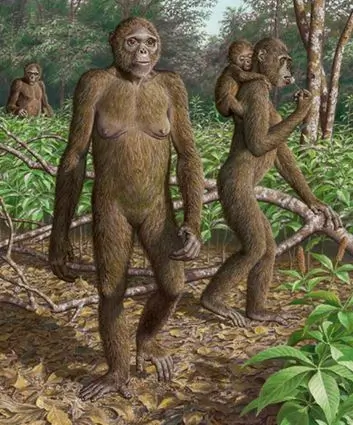
Ardipithecus, an early genus of hominins, plays a crucial role in our understanding of human evolution. This genus provides significant insights into the transition from apelike ancestors to early human forms, shedding light on how our lineage evolved over millions of years. This article delves into the origins, characteristics, and significance of Ardipithecus, offering a comprehensive overview of this pivotal genus in the study of human evolution.
What is Ardipithecus?
Ardipithecus is an extinct genus of hominins that lived during the late Miocene to early Pliocene epochs, approximately 4.4 to 5.8 million years ago. Fossils of Ardipithecus were first discovered in Ethiopia, a region renowned for its rich hominin fossil record.
- Genus Name: The name “Ardipithecus” means “ground ape” in the Afar language, reflecting the genus’s significance in understanding the shift from tree-dwelling to ground-dwelling lifestyles in early human ancestors.
- Species: The most well-known species within this genus is Ardipithecus ramidus, with its famous fossil, “Ardi,” providing critical insights into the physical and behavioral characteristics of early hominins.
Discovery and Significance
The discovery of Ardipithecus fossils was a landmark event in paleoanthropology, offering new perspectives on early human evolution.
- Fossil Discovery: The first fossils of Ardipithecus were uncovered in the 1990s by a team of scientists led by Tim White in the Afar region of Ethiopia. These fossils included partial skeletons, teeth, and skull fragments, which have been invaluable for reconstructing the physical attributes and lifestyle of these early hominins.
- Ardi: The most famous specimen, “Ardi,” is one of the oldest and most complete hominin fossils ever found. Ardi’s well-preserved skeleton has provided key evidence about the morphology and behavior of Ardipithecus, highlighting its significance in the study of human evolution.
Physical Characteristics
Ardipithecus exhibits a mix of features that reveal both ape-like and human-like traits, illustrating the transitional nature of early hominins.
- Bipedalism: Ardipithecus shows evidence of bipedalism, or walking on two legs, although not as developed as in later hominins. The structure of its pelvis and lower limbs suggests that Ardipithecus could walk upright but may have still relied on climbing and other arboreal activities.
- Dentition: The dental structure of Ardipithecus reveals a diet that included fruits, seeds, and possibly leaves. Its teeth were smaller and less specialized compared to later hominins, indicating a less aggressive dietary adaptation.
- Skull and Brain Size: Ardipithecus had a smaller brain size compared to modern humans, but its skull structure showed a mix of primitive and derived features. This combination helps to place Ardipithecus within the broader context of human evolution.

Habitat and Lifestyle
The environmental context in which Ardipithecus lived provides important clues about its behavior and lifestyle.
- Habitat: Ardipithecus lived in a forested environment in East Africa, characterized by a mix of woodlands and open areas. This habitat influenced its physical adaptations and behavior, including its movement between trees and the ground.
- Behavior: The evidence suggests that Ardipithecus was a versatile forager, capable of both arboreal and terrestrial activities. Its ability to move efficiently in both environments may have been a crucial adaptation for survival during this period.
Evolutionary Significance
Ardipithecus plays a pivotal role in our understanding of human evolution, bridging the gap between earlier apelike ancestors and later hominins.
- Transitional Form: Ardipithecus represents a transitional form in human evolution, providing insights into the early stages of bipedalism and the shift from tree-dwelling to ground-dwelling lifestyles.
- Evolutionary Links: The study of Ardipithecus helps to clarify the evolutionary lineage leading to modern humans. It offers valuable information about the adaptations and behaviors of early hominins, contributing to a more comprehensive understanding of human ancestry.
Challenges and Future Research
Despite its significance, the study of Ardipithecus presents ongoing challenges and opportunities for future research.
- Incomplete Fossil Record: While Ardipithecus fossils have provided crucial insights, the incomplete nature of the fossil record poses challenges for fully reconstructing its anatomy and behavior.
- New Discoveries: Continued exploration and discoveries in the Afar region and other parts of East Africa may yield additional fossils and information, further enhancing our understanding of Ardipithecus and its place in human evolution.
Ardipithecus stands as a key figure in the study of human evolution, offering valuable insights into the early stages of our lineage. The genus provides a glimpse into the transitional period when our ancestors were adapting to new environments and developing essential traits like bipedalism. Through the study of Ardipithecus, we gain a deeper appreciation for the complex and fascinating journey of human evolution, connecting us to our ancient past and illuminating the path that led to modern humans.