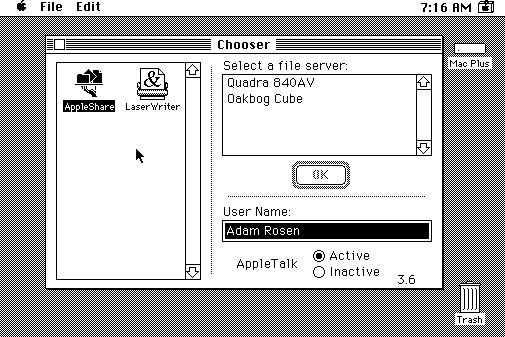
AppleTalk was a groundbreaking networking suite developed by Apple Inc. that revolutionized personal and small office networking in the 1980s and 1990s. It provided a seamless way for Apple computers and devices to communicate over local area networks (LANs) and set the stage for future networking technologies. This article explores the history, components, impact, and eventual decline of AppleTalk, offering a comprehensive overview of its role in the evolution of computer networking.
Historical Background and Introduction
Development and Introduction
AppleTalk was introduced in 1984 alongside the Apple Macintosh computer. At a time when networking was complex and often required specialized knowledge, AppleTalk aimed to simplify the process. The primary objective was to create a networking environment that was easy to set up and use, catering to the needs of home users and small businesses.
Apple’s vision was to develop a system that allowed users to connect multiple devices quickly without requiring extensive configuration. This was a significant innovation, as most contemporary networking solutions were cumbersome and required detailed technical expertise.
Evolution and Features
From its inception, AppleTalk underwent several updates and enhancements. The initial version was designed to support basic networking capabilities, such as file sharing and printer access. Over the years, Apple introduced new features and protocols to expand its functionality and improve performance.
Key Components of AppleTalk
1. AppleTalk Protocols
AppleTalk was comprised of several protocols that worked in tandem to enable communication between devices. Key protocols included:
- AppleTalk Data Stream Protocol (ADSP): ADSP provided reliable, stream-oriented communication similar to the Transmission Control Protocol (TCP) in TCP/IP. It allowed applications to maintain continuous data streams, facilitating smooth and uninterrupted communication.
- AppleTalk Filing Protocol (AFP): AFP was crucial for file sharing across the network. It allowed users to access and manage files on remote computers as if they were local. This protocol made it easy to share documents, media, and other resources among multiple users.
- AppleTalk Transaction Protocol (ATP): ATP was designed for message-oriented communication, enabling applications to exchange data packets. It supported transactions and ensured that messages were delivered accurately and in the correct order.
2. Network Topologies
AppleTalk supported various network topologies to accommodate different needs and environments:
- Ethernet: AppleTalk’s support for Ethernet, a widely adopted network technology, allowed for high-speed communication between devices. Ethernet became the standard for many networks, and AppleTalk’s compatibility with it broadened its appeal.
- LocalTalk: LocalTalk was Apple’s proprietary network technology that used serial communication over twisted-pair cables. It was designed for short-distance connections and provided a simple, cost-effective solution for smaller networks.
- PhoneNet: In addition to LocalTalk, Apple introduced PhoneNet, which utilized standard telephone wiring for networking. This made it possible to set up a network using existing telephone lines, further simplifying installation.
3. Addressing and Configuration
One of AppleTalk’s most user-friendly features was its automatic addressing scheme. Devices connected to an AppleTalk network were assigned unique network addresses without the need for manual configuration. This feature, known as “AppleTalk Addressing,” streamlined network setup and allowed devices to be added or removed effortlessly.
Impact and Usage
1. Adoption and Popularity
AppleTalk was widely adopted in the 1980s and 1990s, particularly in environments where Apple computers were prevalent. Its ease of use and integration with Macintosh systems made it popular in small businesses, educational institutions, and home offices.
AppleTalk’s ability to simplify networking tasks and provide reliable file sharing and printing services contributed to its success. It was a valuable tool for users who needed to connect multiple Apple devices quickly and efficiently.
2. Compatibility and Integration
While AppleTalk was initially exclusive to Apple devices, it eventually saw limited integration with other networking technologies and standards. This integration helped broaden its usage, though it remained closely associated with Apple’s ecosystem.
AppleTalk’s compatibility with various network types, including Ethernet and LocalTalk, demonstrated its flexibility and adaptability. However, its primary focus remained on supporting Apple’s hardware and software.
Decline and Replacement
1. Transition to TCP/IP
As networking technology advanced, the Internet Protocol Suite (TCP/IP) became the dominant standard for networking. TCP/IP offered broader compatibility, scalability, and functionality, which led to the gradual decline of AppleTalk.
Apple began transitioning away from AppleTalk in the late 1990s and early 2000s. The introduction of Mac OS X marked a significant shift towards TCP/IP, as Apple embraced the more widely accepted standard. The transition allowed Apple devices to communicate with a broader range of networks and devices.
2. Legacy and Phasing Out
AppleTalk was officially phased out with the release of Mac OS X 10.6 Snow Leopard in 2009. The discontinuation of AppleTalk support marked the end of an era and reflected the industry’s shift towards modern networking protocols.
Despite its decline, AppleTalk’s legacy remains significant. It played a crucial role in the development of networking technology, setting the stage for future advancements. Its user-friendly design and integration with Apple’s products made it a pioneering solution in the early days of personal networking.
AppleTalk was a pioneering networking protocol suite that significantly impacted the early days of personal and small office networking. Its user-friendly design, automatic addressing, and support for various network topologies made it an invaluable tool for Apple users. Although it has been replaced by more modern technologies, AppleTalk’s contribution to the evolution of networking remains a key chapter in the history of computer technology.