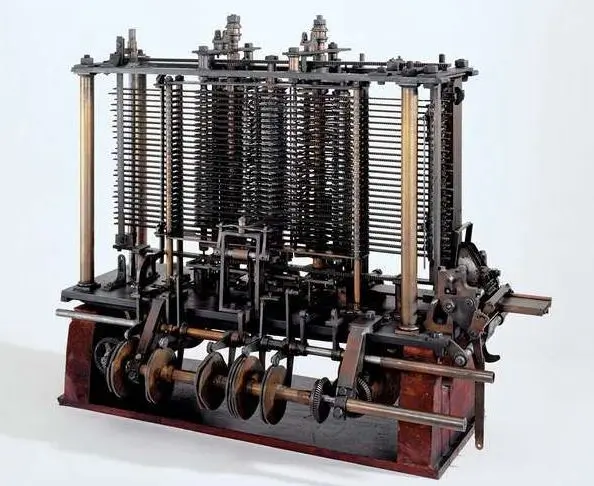
The Analytical Engine, designed by Charles Babbage in the 19th century, is often hailed as the first concept of a general-purpose computer. Though never completed in Babbage’s lifetime, its innovative design laid the foundation for modern computing. This article explores the Analytical Engine’s design, significance, and impact, shedding light on how it contributed to the evolution of computer technology.
What is the Analytical Engine?
The Analytical Engine was an ambitious project conceived by Charles Babbage, an English mathematician, inventor, and mechanical engineer. Designed in the early 1830s, the Analytical Engine was a mechanical device intended to perform complex calculations and process data, much like a modern computer.
Key Features:
- General-Purpose Computing: Unlike earlier calculating machines that were designed for specific tasks, the Analytical Engine was intended to handle a variety of computational problems, making it a prototype for general-purpose computing.
- Mechanical Operation: The engine was designed to be powered by steam and operated through a series of gears, levers, and punch cards, similar to those used in Jacquard looms.
Design and Components
The Analytical Engine’s design was intricate and ahead of its time, featuring several components that are fundamental to modern computing machines.
**1. *The Store:*
- The Store was the engine’s memory unit, designed to hold data and intermediate results during computations. It was envisioned as a series of columns, each capable of storing numbers.
**2. *The Mill:*
- The Mill was the computational unit, similar to the CPU in modern computers. It was responsible for performing arithmetic operations and executing instructions.
**3. *The Control Unit:*
- The engine’s control unit was designed to interpret and execute instructions. It used a system of punched cards, similar to those used in textile weaving, to provide input for operations.
**4. *The Output Unit:*
- The Analytical Engine was equipped to produce printed output, making it one of the first machines to consider how results could be recorded and utilized.
**5. *Punched Cards:*
- Inspired by the Jacquard loom, Babbage’s engine used punched cards to control the operations. These cards encoded instructions and data, allowing the engine to perform complex sequences of tasks.

Historical Context and Development
Charles Babbage’s work on the Analytical Engine was groundbreaking but faced numerous challenges. Though he designed the engine in detail and even built a prototype of the Difference Engine, which was a simpler predecessor, the Analytical Engine was never completed due to technical difficulties, financial constraints, and lack of support.
**1. *Early Inspirations:*
- Babbage’s ideas were influenced by earlier calculating machines, including his own Difference Engine, which was designed to handle polynomial functions.
**2. *Collaboration with Ada Lovelace:*
- Ada Lovelace, an English mathematician, collaborated with Babbage and is credited with writing the first algorithm intended for the Analytical Engine. Her notes on the engine included what is considered the first computer program, and she recognized the potential of computing machines beyond mere calculation.
**3. *Technical Challenges:*
- The complexities of the engine’s design, combined with the limitations of 19th-century manufacturing technology, prevented the completion of the Analytical Engine. Babbage’s ambitious plans faced difficulties in producing precise mechanical components.
Legacy and Impact
The Analytical Engine’s legacy extends beyond its physical construction, influencing the development of modern computers and computational theory.
**1. *Foundation of Modern Computing:*
- Babbage’s concept of a general-purpose machine capable of executing a sequence of operations laid the groundwork for future computers. The principles he established, such as the separation of memory and computation, are fundamental to modern computer architecture.
**2. *Influence on Computer Science:*
- Ada Lovelace’s work on the Analytical Engine contributed to the field of computer science. Her recognition of the engine’s potential for performing any intellectual task paved the way for the development of programmable computers.
**3. *Historical Significance:*
- Although the Analytical Engine was never completed, it is celebrated as a pioneering concept in computing history. Babbage’s designs were revisited and built in later years, demonstrating the enduring relevance of his ideas.
Modern Recognition and Restoration Efforts
In recent years, efforts have been made to bring Babbage’s vision to life. Modern engineers and historians have reconstructed parts of the Analytical Engine based on Babbage’s original designs, showcasing its ingenuity and providing insights into early computing technology.
**1. *Reconstruction Projects:*
- The Science Museum in London has undertaken reconstruction projects to build working models of the Analytical Engine based on Babbage’s plans. These projects have helped illustrate the complexity and foresight of Babbage’s design.
**2. *Educational Impact:*
- The Analytical Engine continues to be a subject of study in computer science and engineering courses, highlighting its significance in the history of technology and innovation.
The Analytical Engine represents a seminal moment in the history of computing. Charles Babbage’s visionary design and Ada Lovelace’s pioneering algorithm foreshadowed the development of modern computers and programming. Although the engine was never completed, its conceptual contributions have had a lasting impact on technology, illustrating the evolution of ideas that paved the way for contemporary computing. The Analytical Engine stands as a testament to human ingenuity and the quest to understand and harness the power of computation.