The economy of Armenia is a dynamic and evolving system, influenced by the country’s historical background, geographical location, and modern-day challenges. Despite being a small, landlocked nation, Armenia has managed to build a resilient economy that is increasingly integrating into the global market. This article provides a comprehensive look at the key sectors, challenges, and opportunities within Armenia’s economy, offering insights into how the country is navigating its economic journey.
Historical Background
Armenia’s economic history has been shaped by its location at the crossroads of Europe and Asia, its long-standing cultural heritage, and its periods under various empires.
- Soviet Era: During the Soviet Union, Armenia’s economy was heavily industrialized, focusing on sectors like machinery, electronics, chemicals, and textiles. Agriculture also played a significant role, particularly in the production of brandy, fruits, and tobacco.
- Post-Soviet Transition: The collapse of the Soviet Union in 1991 led to severe economic disruption in Armenia. The transition from a planned economy to a market economy was challenging, marked by hyperinflation, a steep decline in GDP, and significant emigration due to economic hardships.
- Recovery and Growth: By the late 1990s and early 2000s, Armenia began to recover, with the economy growing steadily. Reforms, investments, and a burgeoning IT sector contributed to this growth. However, the country remains vulnerable to external shocks, particularly given its geopolitical situation.
Key Sectors of the Economy
Armenia’s economy is diverse, with several key sectors contributing to its GDP. These sectors include agriculture, industry, and services, with emerging areas like information technology playing an increasingly important role.
- Agriculture:
- Agriculture remains a vital part of Armenia’s economy, employing around one-third of the population. The country’s mountainous terrain and varying climates allow for the cultivation of a wide range of crops, including fruits, vegetables, and grains.
- Armenia is particularly known for its high-quality wines, brandy, and apricots. The agricultural sector, however, faces challenges such as outdated infrastructure, land fragmentation, and vulnerability to climatic conditions.
- Industry:
- The industrial sector in Armenia includes mining, manufacturing, and energy production. Mining is one of the most significant contributors to Armenia’s economy, with the country being rich in copper, molybdenum, and other minerals.
- Manufacturing is diverse, ranging from food processing to textile production. Armenia has a growing energy sector, with hydroelectric power being a major source of electricity. The country is also exploring renewable energy options to reduce its dependence on imported fuels.
- Services:
- The services sector is the largest contributor to Armenia’s GDP, driven by trade, tourism, financial services, and IT. The tourism industry has seen substantial growth, with Armenia attracting visitors interested in its rich history, cultural heritage, and scenic landscapes.
- The IT sector is a notable success story, with Armenia emerging as a regional tech hub. The country is home to a growing number of startups and tech companies, supported by a well-educated workforce and government incentives.
Economic Challenges
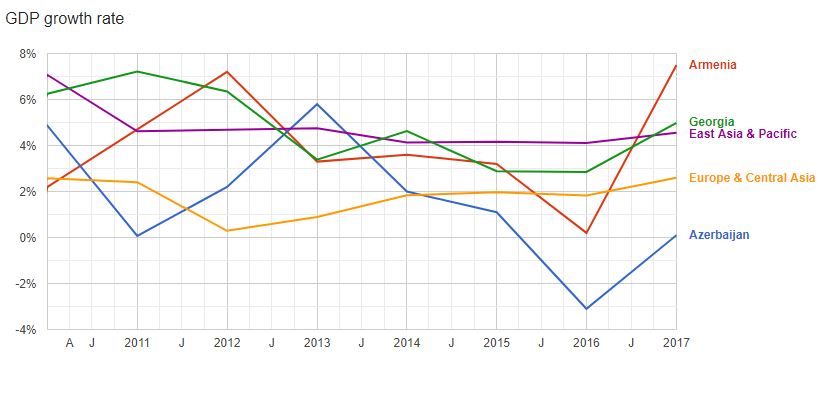
Despite its successes, Armenia faces several economic challenges that affect its growth and development.
- Geopolitical Issues: Armenia’s economy is heavily influenced by its geopolitical situation. The ongoing conflict with Azerbaijan over Nagorno-Karabakh, combined with strained relations with Turkey, limits Armenia’s access to regional markets and trade routes. The country is reliant on the support and cooperation of its neighbors, particularly Russia and Iran.
- Emigration and Demographics: Emigration remains a significant issue for Armenia, with many people leaving the country in search of better economic opportunities abroad. This brain drain impacts the labor force and contributes to the aging population, which poses long-term challenges for economic growth and social services.
- Dependency on Remittances: A large portion of Armenia’s GDP comes from remittances sent by Armenians working abroad, particularly in Russia. While this provides an essential source of income for many households, it also makes the economy vulnerable to external economic conditions in other countries.
- Economic Diversification: While Armenia has made strides in diversifying its economy, it remains dependent on a few key sectors, such as mining and remittances. There is a need for further diversification to build resilience against global economic fluctuations.
Opportunities and Future Prospects
Armenia has several opportunities to strengthen its economy and improve the standard of living for its citizens.
- IT and Innovation: The IT sector is one of the most promising areas of growth for Armenia. The government has implemented policies to encourage innovation, including tax incentives for tech companies and investment in education and research. Armenia’s growing reputation as a tech hub could attract more foreign investment and skilled professionals.
- Tourism Development: Tourism is a vital growth area, with Armenia’s rich cultural heritage and natural beauty offering significant potential. Efforts to improve infrastructure, promote the country internationally, and develop niche tourism markets (such as eco-tourism and adventure tourism) could further boost this sector.
- Renewable Energy: Armenia has considerable potential for renewable energy development, particularly in solar and wind power. Expanding renewable energy could reduce dependency on imported energy sources and create new economic opportunities.
- Regional Integration: Strengthening economic ties with neighboring countries and participating in regional trade agreements could help Armenia mitigate some of its geopolitical challenges. Efforts to integrate more fully with the global economy through trade, investment, and cooperation with international organizations are also crucial.
The economy of Armenia is a complex and evolving system, shaped by historical factors, geopolitical challenges, and modern opportunities. Despite its small size and landlocked position, Armenia has demonstrated resilience and adaptability, building a diverse economy with significant potential for future growth.
By addressing its challenges and capitalizing on its strengths, Armenia can continue to improve the quality of life for its people and achieve sustainable economic development. Understanding the intricacies of Armenia’s economy is essential for anyone interested in the region’s economic future and the broader dynamics of the South Caucasus.