Armenia, a small yet historically rich country in the South Caucasus, is known for its ancient culture, unique traditions, and resilient population. The demographics of Armenia provide a fascinating insight into the composition, trends, and characteristics of its people. This article delves into the demographic landscape of Armenia, exploring population statistics, ethnic composition, language, religion, and other social factors that define the country.
Population Overview
As of recent estimates, Armenia has a population of approximately 2.9 million people. This population has seen significant changes over the years due to various historical events, including wars, migration, and economic challenges.
- Population Growth: Armenia’s population has been relatively stable in recent years, though it experienced significant decline during the late 20th century due to emigration following the collapse of the Soviet Union and the economic hardships that ensued.
- Urban vs. Rural Population: The majority of Armenians live in urban areas, with the capital city, Yerevan, being home to over one-third of the population. Rural areas, while still significant, have seen a gradual decline as people move to cities in search of better opportunities.
- Population Density: Armenia’s population density is relatively low, with most people concentrated in the central regions, particularly around Yerevan. The mountainous terrain and limited arable land contribute to this uneven distribution.
Ethnic Composition
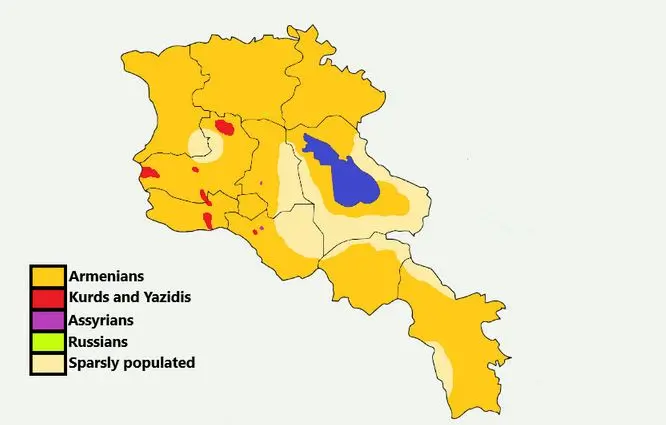
Armenia is one of the most ethnically homogenous countries in the world, with ethnic Armenians making up the vast majority of the population.
- Ethnic Armenians: Approximately 98% of the population identifies as Armenian. The Armenian identity is deeply tied to the country’s long history, language, and Christian heritage.
- Minority Groups: Armenia is home to small minority groups, including Yazidis, Russians, Assyrians, Kurds, and Greeks. These groups have preserved their distinct languages and cultures while integrating into Armenian society.
- Diaspora: The Armenian diaspora is one of the largest in the world, with an estimated 7 million Armenians living outside of Armenia. This global diaspora plays a significant role in Armenia’s economy, culture, and politics.
Language and Religion
Language and religion are central to the Armenian identity, with both playing crucial roles in the daily lives of the people.
- Language: Armenian is the official language of Armenia and is spoken by nearly the entire population. The Armenian language has its unique alphabet, created in the early 5th century by Saint Mesrop Mashtots. Russian and English are also widely spoken, especially in urban areas and among younger generations.
- Religion: Armenia is the first country in the world to adopt Christianity as its state religion, a distinction it gained in 301 AD. The Armenian Apostolic Church is the predominant religious institution, with the vast majority of Armenians identifying as Christians. There are small communities of Catholics, Protestants, and adherents of other religions.
Social and Economic Indicators
Armenia’s demographic profile is closely linked to its social and economic indicators, which provide a deeper understanding of the challenges and opportunities facing the population.
- Education: Armenia boasts a high literacy rate of nearly 100%, reflecting the country’s strong emphasis on education. The education system in Armenia is well-developed, with compulsory education lasting until the age of 18.
- Healthcare: Armenia has a healthcare system that provides basic medical services to its citizens. However, the quality and accessibility of healthcare vary, particularly between urban and rural areas. Life expectancy in Armenia is around 75 years, with women generally living longer than men.
- Employment: Armenia faces challenges in terms of unemployment, especially among the youth. The economy is primarily driven by services, agriculture, and a growing IT sector. Emigration remains a significant issue, with many Armenians seeking employment opportunities abroad.
Migration and Population Trends
Migration has been a defining feature of Armenia’s demographics, with both emigration and immigration shaping the population.
- Emigration: Economic difficulties and regional instability have led to significant emigration from Armenia, particularly during the 1990s. Many Armenians have moved to Russia, the United States, and Europe in search of better living conditions.
- Immigration: Armenia has also experienced immigration, particularly from neighboring countries such as Iran and Syria. The Syrian Armenian community, fleeing the civil war in Syria, has contributed to the diversity of Armenia’s population in recent years.
- Internal Migration: Within Armenia, there has been a trend of internal migration from rural to urban areas, driven by the search for better job opportunities and living conditions. This urbanization has led to the growth of cities like Yerevan, while rural areas face depopulation.
The demographics of Armenia offer a window into a nation with a rich cultural heritage and a resilient population. Understanding the demographic trends and characteristics of Armenia is crucial for appreciating the country’s social dynamics, economic challenges, and future prospects.
As Armenia continues to navigate the complexities of modern development, its demographic profile will play a key role in shaping its path forward. From its ethnically homogenous population to its challenges with migration and economic development, Armenia’s demographics are a vital aspect of its national identity and future potential.