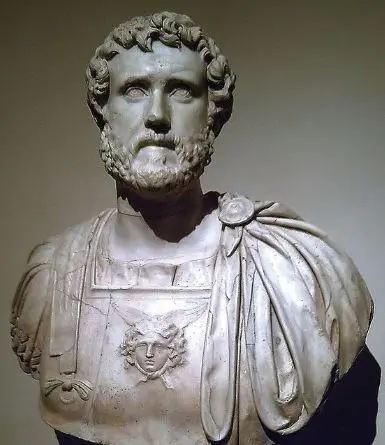
Antoninus Pius, a prominent Roman Emperor, is celebrated for his reign characterized by stability, prosperity, and peace. His tenure, which lasted from 138 to 161 AD, was marked by effective governance and a focus on maintaining the Roman Empire’s internal harmony. This article provides a comprehensive overview of Antoninus Pius, exploring his early life, rise to power, achievements as emperor, and lasting impact on Roman history.
Early Life and Rise to Power
Antoninus Pius was born Titus Aurelius Fulvus Boionius Arrius Antoninus on September 19, 86 AD, in Lanuvium, a town near Rome. He came from a prominent family with connections to the Roman elite. His father, Titus Aurelius Fulvus, was a respected senator, and his mother, Arria Fadilla, belonged to the influential gens Arria.
Antoninus Pius’ early career was marked by his service as a quaestor, aedile, and praetor, showcasing his competence in public office. His rise through the ranks of the Roman bureaucracy was further accelerated by his association with Emperor Hadrian. In 138 AD, Hadrian, recognizing Antoninus Pius’ abilities and character, adopted him as his successor. Upon Hadrian’s death later that year, Antoninus Pius ascended to the throne as Emperor.
Reign and Achievements
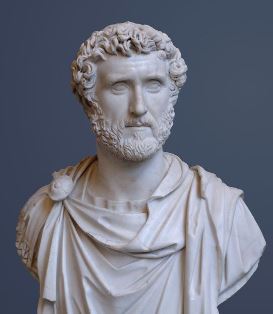
Antoninus Pius’ reign is often viewed as one of the more peaceful and prosperous periods in Roman history. His administration focused on consolidating and maintaining the stability of the empire, avoiding major military conflicts, and implementing reforms that benefited both the Senate and the Roman people.
1. Peaceful Governance
One of Antoninus Pius’ most notable achievements was his ability to maintain peace throughout the Roman Empire. Unlike many of his predecessors and successors, Antoninus Pius did not engage in major military campaigns or wars. His reign is often referred to as a “Golden Age” of Roman peace, or “Pax Romana,” during which internal stability and prosperity were prioritized.
2. Legal and Administrative Reforms
Antoninus Pius is renowned for his contributions to the Roman legal system. He implemented several legal reforms aimed at improving justice and administration. Notably, he worked to refine the legal codes, enhancing the efficiency and fairness of the judicial process. His efforts to streamline the legal system helped reduce corruption and improve the quality of governance.
3. Infrastructure and Urban Development
Under Antoninus Pius, Rome saw significant advancements in infrastructure and urban development. He continued the building projects initiated by his predecessor, Hadrian, and commissioned new constructions that enhanced the empire’s infrastructure. This included the construction of public buildings, roads, and aqueducts, which facilitated trade and communication across the empire.
4. Economic Prosperity
Antoninus Pius’ reign is also marked by economic prosperity. His policies promoted economic stability and growth, which contributed to the overall well-being of the Roman Empire. The emphasis on internal stability allowed for increased trade and commerce, fostering economic development and improving living standards for many Romans.
5. Cultural and Intellectual Flourishing
The period of Antoninus Pius’ rule saw a flourishing of Roman culture and intellectual life. His reign was marked by patronage of the arts and scholarship, contributing to the advancement of Roman literature, philosophy, and architecture. Antoninus Pius supported various cultural endeavors, which enriched the cultural heritage of Rome.
Challenges and Legacy
Despite his successful reign, Antoninus Pius faced some challenges during his time as emperor. While his administration avoided major military conflicts, there were occasional uprisings and border skirmishes that required his attention. Nevertheless, his diplomatic skills and effective management helped to address these challenges with minimal disruption.
Antoninus Pius’ legacy is largely defined by his reputation as a just and benevolent ruler. His reign is often cited as an example of effective and peaceful governance, and he is remembered for his commitment to maintaining the Roman Empire’s internal stability and prosperity. After his death on March 7, 161 AD, Antoninus Pius was succeeded by his adoptive sons, Marcus Aurelius and Lucius Verus, who continued his policies and ensured the continuation of the era of peace and stability.
Antoninus Pius remains a significant figure in Roman history for his contributions to the stability, prosperity, and cultural enrichment of the Roman Empire. His reign, characterized by a focus on internal harmony and effective governance, stands as a testament to the potential for peaceful and productive leadership. Through his legal reforms, infrastructural projects, and dedication to the well-being of his people, Antoninus Pius left an enduring legacy that continues to be celebrated and studied by historians and scholars today.