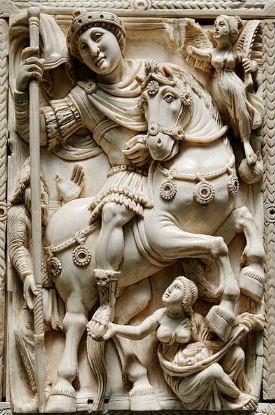
Anastasius I was a Byzantine emperor who ruled from 491 to 518 CE. His reign marked a transformative period for the Eastern Roman Empire, with a focus on administrative, economic, and military reforms that laid the foundation for future stability and success. Anastasius is best remembered for his fiscal responsibility, his military efforts, and his ability to maintain relative peace during a time of significant internal and external challenges.
This article delves into the life, reign, and legacy of Anastasius I, exploring how this often-overlooked emperor shaped the course of Byzantine history.
Early Life of Anastasius I
Anastasius was born around 431 CE in Dyrrhachium (modern-day Durrës, Albania), in the province of Epirus Nova. He came from a modest background, with some sources suggesting he worked as a palace official before his rise to power. His early life remains somewhat obscure, but it is known that he had a reputation for piety, intelligence, and integrity.
Before becoming emperor, Anastasius served in various administrative roles within the Byzantine court. His ability to navigate the complex political landscape of Constantinople and his respected moral character positioned him as a trusted official in the imperial palace.
Anastasius’ Rise to Power
Anastasius’ ascension to the throne was unexpected. When the emperor Zeno died in 491, the Eastern Roman Empire was in turmoil. Zeno’s widow, Empress Ariadne, played a key role in choosing Anastasius to succeed him. Despite his lack of direct military experience, Anastasius was chosen for his administrative skills and his personal virtues, which aligned with Ariadne’s vision of a stable empire.
To legitimize his rule, Anastasius married Ariadne, even though she was much older than him. His reign began relatively peacefully, though his early years were marked by the need to quell dissent and stabilize the government.
Religious and Political Challenges
One of the significant issues that Anastasius faced during his reign was the growing religious tension between the Monophysites and Chalcedonian Christians. The Monophysite doctrine, which emphasized the singular divine nature of Christ, had gained a strong following in the Eastern provinces, while the Chalcedonian belief in the dual nature of Christ (divine and human) was the official position of the Church after the Council of Chalcedon in 451.
Anastasius himself is believed to have had Monophysite sympathies, though he tried to maintain a policy of religious tolerance. His attempts to reconcile the two factions, however, met with mixed success, and religious disputes continued to cause unrest throughout his reign.
Economic and Administrative Reforms
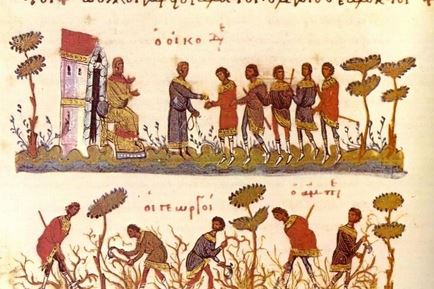
One of Anastasius’ greatest contributions to the Byzantine Empire was his series of economic and fiscal reforms. Upon taking the throne, he inherited an empire plagued by financial instability, partly due to the costly wars and mismanagement under previous emperors.
Anastasius tackled these issues head-on. He reformed the tax system, eliminating some of the most burdensome taxes that had been placed on the lower classes. One notable reform was the abolition of the chrysargyron, a tax on businesses that had caused widespread hardship. By doing so, Anastasius won the support of the general population, especially the merchants and the middle class.
He also implemented measures to reduce corruption and streamline the bureaucracy. By carefully managing the empire’s finances, Anastasius amassed a significant surplus in the imperial treasury. At the time of his death, it was reported that the empire had a surplus of 320,000 pounds of gold, which is a testament to his prudent economic policies.
Military Efforts and Defense
Anastasius inherited a Byzantine Empire facing multiple external threats. His military focus was primarily on the Balkans and the Persian frontier.
Wars with the Isaurians
One of the first challenges Anastasius faced was a series of conflicts known as the Isaurian Wars (492-497). These wars were fought against the Isaurians, a rebellious group from Zeno’s homeland who sought to maintain power after Zeno’s death. The Isaurian Wars were long and costly, but Anastasius eventually succeeded in suppressing the revolt and securing the stability of the empire.
Defense against the Sassanian Empire
On the eastern frontier, Anastasius had to deal with the Sassanian Empire, Byzantium’s long-time rival. Tensions between the two empires occasionally flared into open conflict, most notably during the Anastasian War (502-506). Although the conflict resulted in no decisive victory for either side, Anastasius improved the defense of the empire’s eastern provinces by fortifying key cities.
Anastasius also constructed the Anastasian Wall, a massive defensive structure stretching 40 miles west of Constantinople. This wall was designed to protect the capital from invasions by barbarian tribes and Huns from the north. It remained a crucial part of the city’s defenses for centuries.
Anastasius’ Later Years
In his later years, Anastasius faced increased internal dissent, particularly in the form of the Vitalian revolt. Vitalian, a military commander in Thrace, led a series of revolts against Anastasius’ government, partly motivated by religious differences (Vitalian was a Chalcedonian Christian). Although Vitalian’s forces reached the gates of Constantinople, Anastasius managed to quell the rebellion by 515 CE, maintaining his hold on power.
Despite these challenges, Anastasius remained a popular emperor among many segments of society, especially those who benefited from his tax reforms and economic policies. However, his reign was not without criticism, particularly from those who opposed his religious policies.
Death and Succession
Anastasius died in 518 CE at the age of 87, after ruling for 27 years. His death marked the end of an era of relative stability and reform. Anastasius did not have any surviving children, which led to a brief power struggle over his succession.
Eventually, Justin I, a career soldier, succeeded Anastasius, leading to the rise of the Justinian dynasty, which would oversee one of the most significant periods in Byzantine history.
Legacy of Anastasius I
Anastasius I is often overshadowed by more famous Byzantine emperors, such as Justinian I, but his reign was pivotal in the development of the Byzantine Empire. His economic and administrative reforms laid the groundwork for a more prosperous and stable state, and his emphasis on fiscal responsibility allowed the empire to thrive long after his death.
His military efforts, though not marked by great conquests, strengthened the empire’s borders and protected it from external threats. Additionally, his religious policies, though controversial, reflected the complex and diverse nature of the empire he ruled.
Anastasius’ reign may not have been filled with grand achievements, but his prudent governance and reforms had a lasting impact on the Byzantine Empire, shaping it for the challenges of the future.
Anastasius I was a capable and forward-thinking ruler who successfully navigated a challenging period in Byzantine history. His reign was defined by economic reform, religious tolerance, and military fortification, all of which contributed to the long-term strength of the empire. Although often overlooked, Anastasius deserves recognition as one of the most important Byzantine emperors, whose policies left an enduring legacy on the empire he worked so diligently to improve.