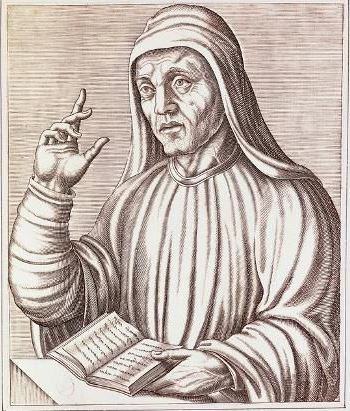
Alcuin of York (c. 735-804) was a prominent scholar, teacher, and theologian of the early medieval period. His contributions to education, theology, and literature during the Carolingian Renaissance had a profound impact on the intellectual revival of the early Middle Ages. This article explores Alcuin’s life, achievements, and legacy, highlighting his role in shaping the educational and cultural landscape of his time.
Early Life and Education
Born around 735 in the city of York, in present-day England, Alcuin was educated at the famous monastery of York, where he received a comprehensive education in the liberal arts. This early education laid the foundation for his future contributions as a scholar and teacher.
Monastic Influence
- Education at York: Alcuin studied under the guidance of the renowned scholar Ecgbert of York. The monastery of York was a center of learning and played a crucial role in shaping Alcuin’s intellectual development.
- Influence of Monastic Life: The monastic tradition of scholarship and learning had a lasting influence on Alcuin’s approach to education and his commitment to preserving and disseminating knowledge.
Contributions to the Carolingian Renaissance
Alcuin’s career took a pivotal turn when he was invited by Charlemagne, the King of the Franks, to join his court as an advisor and educator. This marked the beginning of Alcuin’s significant role in the Carolingian Renaissance, a period of renewed interest in classical learning and culture.
Educational Reforms
- Revival of Classical Learning: Alcuin played a central role in the revival of classical education during the Carolingian Renaissance. He emphasized the study of Latin grammar, rhetoric, logic, and other liberal arts, which were crucial for intellectual and cultural renewal.
- Curriculum Development: Alcuin developed a comprehensive educational curriculum for the palace school at Aachen, which became a model for other educational institutions of the time. His curriculum included a focus on grammar, rhetoric, dialectic, arithmetic, geometry, music, and astronomy.
Influence on Charlemagne’s Court
- Advisor and Teacher: Alcuin’s role as an advisor and teacher at Charlemagne’s court was instrumental in shaping the intellectual and cultural environment of the Carolingian Empire. He helped Charlemagne’s court become a center of learning and scholarship.
- Literary Works: Alcuin composed and edited various works, including theological writings, educational texts, and poetry. His literary contributions reflected his deep knowledge of classical and Christian traditions.
Theological and Philosophical Impact
Alcuin’s work extended beyond education to include significant contributions to theology and philosophy:
- Theological Writings: Alcuin wrote extensively on theological topics, including biblical exegesis and church doctrine. His works contributed to the development of medieval Christian thought and doctrine.
- Philosophical Influence: Alcuin’s philosophical writings, which included discussions on logic and ethics, were influential in shaping the intellectual discourse of his time.
Legacy and Influence
Alcuin’s impact on the Carolingian Renaissance and medieval scholarship was profound and enduring:
- Educational Reforms: Alcuin’s educational reforms helped lay the groundwork for the development of medieval education. His emphasis on classical learning and the liberal arts influenced the curriculum of medieval schools and universities.
- Preservation of Knowledge: Alcuin’s efforts in preserving and transmitting classical and Christian texts were crucial in safeguarding knowledge during a time of political and social upheaval. His work contributed to the intellectual continuity of the Middle Ages.
- Cultural Impact: Alcuin’s contributions to literature, theology, and philosophy enriched the cultural and intellectual life of the Carolingian Empire and had a lasting influence on European scholarship.
Alcuin of York was a towering figure in the early medieval period whose contributions to education, theology, and literature played a crucial role in the Carolingian Renaissance. His innovative approaches to teaching, dedication to preserving knowledge, and influence on Charlemagne’s court left a lasting legacy that shaped the intellectual and cultural landscape of medieval Europe.
By understanding Alcuin’s life and achievements, we gain insight into the intellectual revival of the Carolingian Renaissance and the enduring impact of his work on medieval education and scholarship.