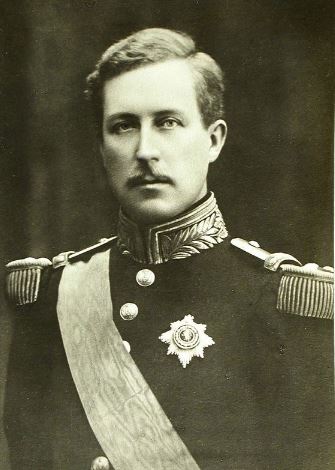
Albert I, known as the “Soldier King,” was a pivotal figure in Belgian history. As the third King of the Belgians, he reigned from 1909 until his untimely death in 1934. Albert I is best remembered for his steadfast leadership during World War I, his dedication to the Belgian people, and his efforts to rebuild the nation after the devastation of the war. This article delves into the life, reign, and legacy of Albert I, highlighting his contributions to Belgium and his enduring impact on the nation.
Early Life and Ascension to the Throne
Albert Léopold Clément Marie Meinrad was born on April 8, 1875, in Brussels, Belgium. He was the second son of Prince Philippe, Count of Flanders, and Princess Marie of Hohenzollern-Sigmaringen. As the nephew of King Leopold II, Albert was not initially in line for the throne. However, after the death of his older brother, Prince Baudouin, in 1891, Albert became the heir presumptive.
Albert was educated in Belgium and developed a keen interest in science, particularly in geography and engineering. His early education and travels throughout Europe and Africa shaped his views on international affairs and colonial issues. In 1900, he married Duchess Elisabeth of Bavaria, and the couple had three children: Leopold, Charles, and Marie-José.
Upon the death of King Leopold II in December 1909, Albert ascended to the Belgian throne, taking the regnal name Albert I. His coronation was marked by his promise to rule as a constitutional monarch, dedicated to the well-being of the Belgian people.
World War I and the Role of the Soldier King
Albert I’s reign was defined by his leadership during World War I. When Germany invaded Belgium in August 1914, Albert refused to allow his country to be a mere passage for German troops on their way to France. He famously declared, “Belgium is a nation, not a road,” and took command of the Belgian army, leading his troops in the defense of their homeland.
The early years of the war were marked by the Belgian army’s fierce resistance against the much larger and better-equipped German forces. Despite being forced to retreat to the Yser River, Albert’s leadership helped prevent the complete occupation of Belgium, allowing the country to maintain a strip of unoccupied territory in the west.
Albert I became a symbol of Belgian resistance, and his determination earned him the admiration of his people and the respect of other Allied leaders. Throughout the war, he remained with his troops on the front lines, enduring the hardships of trench warfare alongside them. His presence boosted morale and solidified his reputation as the “Soldier King.”
Post-War Reconstruction and Reforms
After the end of World War I in 1918, Belgium was left devastated, with much of the country in ruins. Albert I played a crucial role in the post-war reconstruction of Belgium, advocating for economic recovery, infrastructure development, and social reforms. His efforts were instrumental in rebuilding the nation’s economy and restoring its infrastructure.
Albert I was also a proponent of political reforms, including the extension of universal male suffrage, which was implemented in 1919. He supported the establishment of new social policies aimed at improving the lives of Belgian workers, reflecting his commitment to social justice and the welfare of his people.
Scientific and Cultural Contributions
Albert I was not only a military and political leader but also a patron of science and culture. He had a deep interest in the natural sciences, particularly in geology and exploration. His fascination with mountaineering led him to become an accomplished alpinist, and he made several expeditions to the Alps and other mountain ranges.
Under his patronage, the Royal Belgian Institute of Natural Sciences and the Belgian National Fund for Scientific Research were established, promoting scientific research and exploration. His support for the arts and sciences left a lasting legacy in Belgium’s cultural and intellectual life.
Tragic Death and Legacy
On February 17, 1934, Albert I died tragically in a mountaineering accident in Marche-les-Dames, Belgium. His death shocked the nation, and he was mourned as a national hero. His son, Leopold III, succeeded him as King of the Belgians.
Albert I’s legacy endures in Belgium, where he is remembered as a symbol of courage, leadership, and resilience. Monuments, statues, and institutions across the country bear his name, honoring his contributions to the nation. His life and reign continue to inspire Belgians and serve as a reminder of the importance of leadership and dedication to one’s country.
Albert I’s reign was marked by his unwavering commitment to Belgium during some of its darkest hours. As the Soldier King, he led his nation through the trials of World War I and played a crucial role in the post-war recovery and modernization of Belgium. His legacy as a leader, a soldier, and a patron of the arts and sciences continues to be celebrated in Belgium and beyond.