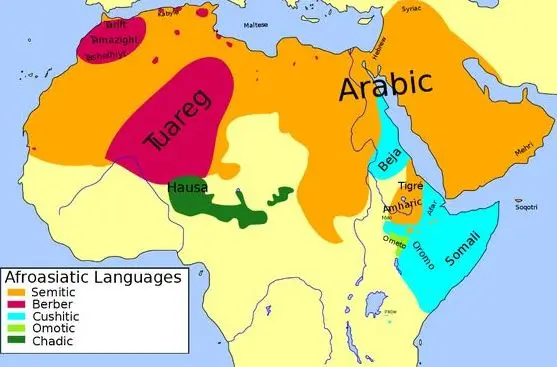
The Afroasiatic languages form one of the world’s most ancient and expansive language families. Spanning across Africa and parts of the Middle East, this linguistic group includes languages that have shaped human history for thousands of years. In this article, we’ll explore the origins, branches, and significance of Afroasiatic languages, ensuring that you gain a comprehensive yet easily digestible understanding of this fascinating topic.
What Are Afroasiatic Languages?
Afroasiatic languages are a large family of languages spoken predominantly in North Africa, the Horn of Africa, and parts of the Middle East. This language family includes over 300 languages spoken by more than 500 million people. The family is divided into several branches, each with unique characteristics and geographical distributions.
Historical Background and Origins
The Afroasiatic language family is believed to have originated around 10,000 years ago, likely in northeastern Africa or the Middle East. Over millennia, speakers of Proto-Afroasiatic, the hypothesized common ancestor of these languages, migrated across vast regions, leading to the development of distinct languages.
- Proto-Afroasiatic: This is the reconstructed common ancestor of all Afroasiatic languages. While the exact location of its origin is debated, many scholars believe it emerged in the African continent, gradually spreading into the Middle East.
- Cultural and Historical Significance: Afroasiatic languages have played a crucial role in the development of major ancient civilizations, including Egypt and Mesopotamia. These languages have also been the vehicles for some of the world’s most influential religious texts.
Branches of Afroasiatic Languages
The Afroasiatic language family is traditionally divided into six main branches, each with its own distinct languages and dialects:
- Semitic: This branch includes languages like Arabic, Hebrew, Amharic, and Aramaic. The Semitic languages are among the most widely spoken and historically significant languages in the Afroasiatic family. Arabic, for example, is spoken by over 300 million people across the Middle East and North Africa.
- Berber (Amazigh): Spoken by the Berber people in North Africa, particularly in Morocco, Algeria, and Tunisia, the Berber languages have experienced a revival in recent years as efforts have been made to preserve and promote them.
- Egyptian: This branch is known primarily through the ancient Egyptian language and its later form, Coptic. Although Coptic is no longer a spoken language, it remains the liturgical language of the Coptic Orthodox Church.
- Cushitic: Cushitic languages are spoken in the Horn of Africa, with Somali and Oromo being the most widely spoken. These languages are vital to the cultural identity of millions of people in the region.
- Chadic: The Chadic languages are spoken in parts of West and Central Africa, with Hausa being the most prominent. Hausa is a major language in Nigeria and Niger and serves as a lingua franca in much of West Africa.
- Omotic: The Omotic languages are primarily spoken in southwestern Ethiopia. Though less known than other branches, Omotic languages contribute to the rich linguistic diversity of the region.
Linguistic Features of Afroasiatic Languages
Afroasiatic languages share certain linguistic features, though the specifics can vary widely among the branches:
- Consonantal Roots: A notable feature in many Afroasiatic languages, particularly in the Semitic branch, is the use of consonantal roots. Words are formed by inserting different vowels into a set of consonants that carry the core meaning. For instance, in Arabic, the root “k-t-b” relates to writing, and various forms like “kitab” (book) and “kataba” (he wrote) are derived from it.
- Gender and Number Agreement: Afroasiatic languages often exhibit complex systems of gender and number agreement. In Semitic languages, nouns, adjectives, and verbs are marked for masculine and feminine, as well as singular, dual, and plural forms.
- Vowel Systems: Many Afroasiatic languages feature rich vowel systems, which play a crucial role in word formation and meaning, especially in Cushitic and Berber languages.
The Cultural and Societal Impact of Afroasiatic Languages
The Afroasiatic languages have profoundly influenced the cultures and societies of the regions where they are spoken:
- Religious Influence: Afroasiatic languages, particularly the Semitic languages, have been the mediums for some of the world’s most significant religious texts. Hebrew is the language of the Hebrew Bible, while Arabic is the language of the Quran. These texts have shaped religious beliefs and practices for billions of people.
- Literature and Scholarship: Afroasiatic languages have a rich literary tradition. Ancient Egyptian hieroglyphs, Arabic poetry, and Ethiopian religious texts are just a few examples of the literary contributions from this linguistic family.
- Cultural Identity: In many regions, Afroasiatic languages are closely tied to cultural identity. For example, the Berber languages are central to the identity of the Amazigh people in North Africa, while Amharic is a key part of Ethiopian national identity.
Challenges and Preservation Efforts
While Afroasiatic languages have a rich history, they also face challenges in the modern world:
- Language Endangerment: Several Afroasiatic languages, particularly those spoken by smaller communities, are at risk of extinction. This endangerment is often due to the dominance of more widely spoken languages and the pressures of globalization.
- Preservation Efforts: Despite these challenges, there are ongoing efforts to preserve and revitalize Afroasiatic languages. For instance, the revival of Berber languages in North Africa has gained momentum, with increased efforts to promote these languages in education and media.
The Lasting Legacy of Afroasiatic Languages
Afroasiatic languages represent a linguistic heritage that has shaped the development of human civilization. From the hieroglyphs of ancient Egypt to the poetic verses of the Quran, these languages have left an indelible mark on history, culture, and religion. As preservation efforts continue, the legacy of Afroasiatic languages will endure, providing a bridge between the past and future for generations to come.
This article offers a comprehensive overview of Afroasiatic languages, blending historical context, linguistic features, and cultural significance. Whether you’re new to the topic or looking to deepen your understanding, this piece provides an informative and engaging exploration of one of the world’s most ancient and influential language families.