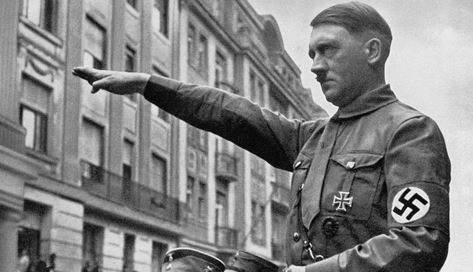
Adolf Hitler remains one of the most controversial and significant figures in modern history. His actions and ideology led to profound global consequences, including World War II and the Holocaust. This article provides a comprehensive overview of Adolf Hitler’s life, political ideology, and the historical impact of his leadership.
Early Life and Background
Adolf Hitler was born on April 20, 1889, in Braunau am Inn, Austria. His early life and experiences significantly influenced his later actions and beliefs.
- Family and Education: Hitler was the fourth of six children born to Alois and Klara Hitler. His father was a customs official, and his mother was a homemaker. Hitler’s academic performance was mediocre, and he eventually dropped out of school.
- Early Aspirations: Hitler moved to Vienna with hopes of becoming an artist, but he was rejected by the Academy of Fine Arts. His years in Vienna exposed him to various nationalist and anti-Semitic ideas that would shape his future ideology.
Rise to Power
Hitler’s rise to power was marked by his involvement with the National Socialist German Workers’ Party (NSDAP) and his ability to exploit political instability in Germany.
- Joining the NSDAP: Hitler joined the NSDAP in 1920 and quickly rose through the ranks due to his oratory skills and charismatic leadership. By 1921, he became the party’s leader.
- The Beer Hall Putsch: In 1923, Hitler attempted a coup known as the Beer Hall Putsch, which failed, resulting in his imprisonment. During his time in prison, he wrote “Mein Kampf,” outlining his ideological views and political goals.
- Electoral Success: After his release, Hitler focused on gaining political power through democratic means. By capitalizing on the economic hardships of the Great Depression and using effective propaganda, he gained significant support. In 1933, he was appointed Chancellor of Germany.
Ideology and Policies
Hitler’s ideology was rooted in extreme nationalism, anti-Semitism, and anti-communism. His policies had far-reaching and devastating effects.
- National Socialism: Hitler promoted a vision of a racially pure Aryan state. He believed in the superiority of the Germanic races and sought to expand German territory to provide living space (Lebensraum) for the Aryan race.
- Anti-Semitism: Central to Hitler’s ideology was a deep-seated hatred of Jews. He blamed Jews for Germany’s economic and social problems and sought their exclusion from public life. This anti-Semitic ideology led to the implementation of the Holocaust.
- Totalitarian Regime: Hitler established a totalitarian regime characterized by the suppression of political dissent, control over the media, and the use of state violence to enforce compliance. The Gestapo, Hitler’s secret police, played a crucial role in maintaining his control.
World War II and the Holocaust
Hitler’s policies and ambitions led to the outbreak of World War II and the implementation of the Holocaust, two of the most catastrophic events in human history.
- World War II: Hitler’s invasion of Poland in 1939 triggered World War II. His aggressive expansionist policies led to widespread conflict across Europe and beyond. The war saw immense loss of life and destruction, reshaping the global order.
- The Holocaust: Under Hitler’s orders, the Nazi regime orchestrated the Holocaust, the systematic genocide of six million Jews, along with millions of others, including Romani people, disabled individuals, and political dissidents. Concentration camps and extermination camps were established to carry out this horrific plan.
Downfall and Legacy
Hitler’s reign ended in April 1945, but his legacy continues to impact the world.
- End of the War: As Allied forces closed in on Berlin, Hitler retreated to his bunker. On April 30, 1945, Hitler and his wife, Eva Braun, committed suicide. Germany surrendered shortly after, leading to the end of World War II in Europe.
- Post-War Impact: Hitler’s actions left a profound legacy of devastation and trauma. The Nuremberg Trials were held to prosecute war criminals and hold those responsible for the Holocaust accountable.
- Historical Reflection: Hitler’s life and ideology are studied to understand the causes and consequences of totalitarianism, racism, and war. His impact serves as a stark reminder of the dangers of unchecked power and prejudice.
Lessons from History
Adolf Hitler’s life and leadership had a profound and lasting impact on the world. His ideology and actions led to some of the darkest chapters in human history, including World War II and the Holocaust. Understanding Hitler’s rise to power, his policies, and the resulting global consequences is crucial for preventing future atrocities and fostering a more just and humane world.