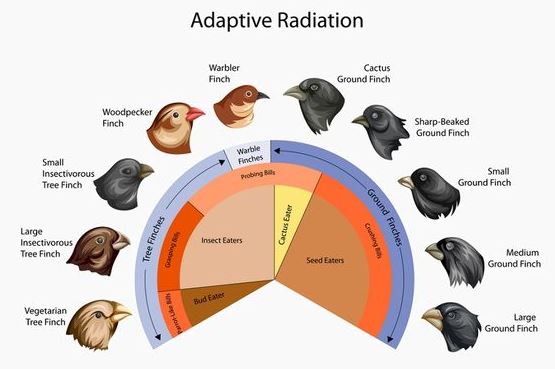
Adaptive radiation is an evolutionary process in which a single ancestral species rapidly diversifies into a wide variety of forms to adapt to different ecological niches. This phenomenon occurs when an organism colonizes a new habitat or when a significant environmental change creates new ecological opportunities. Adaptive radiation helps explain the high diversity of species found in certain environments and contributes to our understanding of how evolution shapes biodiversity.
Key Features of Adaptive Radiation
- Rapid Speciation: Adaptive radiation typically involves the rapid emergence of new species from a common ancestor. This occurs when an organism encounters a new environment with diverse ecological opportunities.
- Ecological Niches: In adaptive radiation, the new species occupy different ecological niches or roles within an environment. These niches can include variations in diet, habitat, or behavior that allow each species to exploit different resources or adapt to different conditions.
- Morphological Diversification: The process often leads to significant changes in physical traits (morphology) among the new species. For example, beak sizes and shapes in Darwin’s finches are adapted to different types of available food.
- Evolutionary Innovation: Adaptive radiation often involves the development of novel traits or adaptations that enable species to exploit new environments or resources. This innovation is critical for the diversification of species.
Examples of Adaptive Radiation
- Darwin’s Finches: One of the most famous examples of adaptive radiation is observed in the finches of the Galápagos Islands. A single ancestral species of finch colonized the islands and evolved into several different species, each with unique beak shapes adapted to different types of food.
- Cichlid Fishes: In the African Great Lakes, cichlid fishes have undergone adaptive radiation. From a few ancestral species, they have diversified into hundreds of species with different feeding strategies, body shapes, and colors, each adapted to specific ecological niches within the lakes.
- Hawaiian Honeycreepers: The honeycreepers of Hawaii are another example of adaptive radiation. These birds evolved from a common ancestor into various species with different bill shapes and feeding habits, adapted to the diverse flora of the Hawaiian Islands.
Mechanisms Driving Adaptive Radiation
- Geographic Isolation: When a population becomes geographically isolated from its original group, it can evolve independently, leading to adaptive radiation. Geographic barriers such as mountains or bodies of water can create these isolated environments.
- Ecological Opportunity: When a new habitat becomes available, or an existing habitat undergoes significant changes, organisms that colonize this new habitat may diversify rapidly to exploit the new resources or environmental conditions.
- Adaptive Evolution: The presence of new selection pressures or environmental challenges can drive adaptive evolution, leading to the emergence of new species with specialized traits suited to the new conditions.
Implications for Evolutionary Biology
Adaptive radiation provides insight into the mechanisms of evolutionary change and biodiversity. It illustrates how species can rapidly diversify and adapt to new environments, leading to a high degree of variation within a relatively short period. Studying adaptive radiation helps scientists understand the dynamics of speciation, the role of ecological factors in evolution, and the evolutionary history of various organisms. Adaptive radiation is a fundamental concept in evolutionary biology that explains how a single ancestral species can diversify into a multitude of forms to fill different ecological niches. This process highlights the dynamic nature of evolution and the ability of organisms to adapt to changing environments. By examining examples of adaptive radiation, scientists gain valuable insights into the mechanisms of evolution and the diversity of life on Earth.