Find Web Info
  • Home
  • About
  • Privacy Policy
    • Terms of Use
    • Cookies Policy
    • Disclaimer
    • Copyright
  • Blog
    • News
  • Contact Us
Find Web Info
Find Web Info
  • Home
  • About
  • Privacy Policy
    • Terms of Use
    • Cookies Policy
    • Disclaimer
    • Copyright
  • Blog
    • News
  • Contact Us
  • News

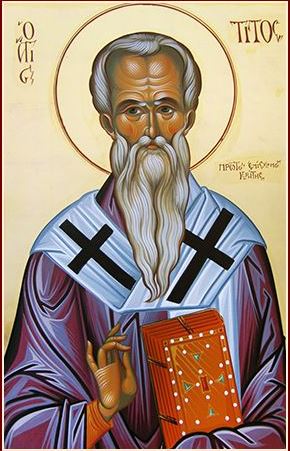
Saint Titus: The Apostle of Crete

  • February 18, 2026
  • Fernando Filipe
Saint Titus
Total
0
Shares
Total
0
Shares
Share
Tweet
Pin it
Share
Share

Saint Titus, a significant figure in early Christianity, is renowned for his role as an apostle and his contributions to the spread of Christianity in the Mediterranean region. This article explores the life, contributions, and legacy of Saint Titus, focusing on his role in the early Church and his enduring impact.

Who Was Saint Titus?

Saint Titus was one of the prominent early Christian figures and a trusted companion of the Apostle Paul. His life and contributions are celebrated in both the Eastern and Western Christian traditions.

  1. Early Life and Background: Although details about Saint Titus’s early life are sparse, he is believed to have been a Greek from Antioch in Syria. He was a convert to Christianity and became one of Paul’s close associates and collaborators.
  2. Role as an Apostle: Titus is best known for his role as an apostle and missionary. He is mentioned multiple times in the New Testament, primarily in the Epistles of Paul, which highlight his significance in the early Church.

Contributions and Missions

Saint Titus played a crucial role in the early spread of Christianity, particularly in the region of Crete.

  1. Mission to Crete: Paul appointed Titus to oversee the Christian community on the island of Crete. According to tradition and the New Testament, Titus was responsible for organizing and establishing churches in Crete, providing guidance, and addressing issues within the community.
  2. Epistle to Titus: The Epistle to Titus, one of the books of the New Testament, is attributed to Paul and addressed to Titus. It provides instructions on church organization, qualifications for church leaders, and the importance of good works and sound doctrine.
  3. Council of Jerusalem: Titus also played a role in the Council of Jerusalem, which addressed the controversy regarding the necessity of following Jewish laws for Gentile converts to Christianity. His presence at this council signifies his importance in the early Church’s decision-making processes.

Legacy and Veneration

Saint Titus’s legacy extends beyond his lifetime, and he is venerated in various Christian traditions.

  1. Saint Titus Day: In the Christian liturgical calendar, Saint Titus is commemorated on January 4th. His feast day is celebrated by both the Eastern Orthodox Church and the Roman Catholic Church.
  2. Patronage: Saint Titus is considered the patron saint of Crete. His work and influence on the island have made him a symbol of faith and leadership in the region.
  3. Writings and Teachings: The Epistle to Titus remains an important part of the New Testament, offering guidance on Christian living and church leadership. This letter continues to be a valuable resource for Christian teachings and ecclesiastical organization.
INTERESTING READ
What are Antianginal Drugs?

Saint Titus, a pivotal figure in early Christianity, is remembered for his significant contributions to the spread of the Christian faith and his leadership in the early Church. His role in establishing and nurturing Christian communities, particularly in Crete, and his association with the Apostle Paul highlight his importance in Christian history. The legacy of Saint Titus endures through his veneration in Christian traditions and the teachings preserved in the New Testament.


Total
0
Shares
Share 0
Tweet 0
Pin it 0
Fernando Filipe

Fernando Filipe is an expert journalist and the founder of Findwebinfo.com. With a sharp eye for detail and a deep passion for history, he’s dedicated to uncovering the stories that shaped our world. Through clear, engaging writing, he brings the past to life — one fascinating fact at a time.

Previous Article
Arahant
  • News

Arahant: The Path to Enlightenment in Buddhism

  • February 18, 2026
  • Fernando Filipe
View Post
Next Article
Antidorcas marsupialis
  • News

Antidorcas marsupialis: The Fascinating Springbok of Southern Africa

  • February 18, 2026
  • Fernando Filipe
View Post

Leave a Reply Cancel reply

Your email address will not be published. Required fields are marked *

Worth reading

Hip hop has become a vital part of Dutch culture, serving not only as a music genre but also as a platform for artistic expression, social commentary, and community building,Dutch hip hop

What is the history of Dutch hip hop?

Hip hop has become a vital part of Dutch culture, serving not only as a music genre but also as...

Ghanaian hip-hop, often referred to as GH Rap, represents a vibrant fusion of American hip-hop with distinct Ghanaian influences, particularly the use of Twi (a local language) and highlife music,Ghanaian hip hop

What is Ghanaian hiphop called?

Ghanaian hip-hop, often referred to as GH Rap, represents a vibrant fusion of American hip-hop with distinct Ghanaian influences, particularly...

Amr Diab, the iconic Egyptian singer often referred to as the "King of Arabic Pop" or the "Father of Mediterranean Music," was born into a Muslim family in Port Said, Egypt.

What is Amr Diab’s religion?

Amr Diab, the iconic Egyptian singer often referred to as the "King of Arabic Pop" or the "Father of Mediterranean...

Who are the top Belgian hip-hop artists?

Who are the top Belgian hip-hop artists?

In recent years, Belgium has witnessed a dynamic surge in its hip-hop scene, reflecting the country’s unique cultural diversity. Bridging...

AIM, or AOL Instant Messenger, was a groundbreaking platform that transformed how people communicated online.

What is AIM in software?

AIM, or AOL Instant Messenger, was a groundbreaking platform that transformed how people communicated online. Launched in 1997 by America...

Albinism is a genetic condition characterized by a significant lack of melanin, the pigment responsible for the color of our skin, hair, and eyes. ,Albinism in humans

What causes albinism in humans?

Albinism is a genetic condition characterized by a significant lack of melanin, the pigment responsible for the color of our...

Find Web Info
  • Home
  • About
  • Privacy Policy
  • Blog
  • Contact Us
© 2025 and beyond Findwebinfo.com

Input your search keywords and press Enter.