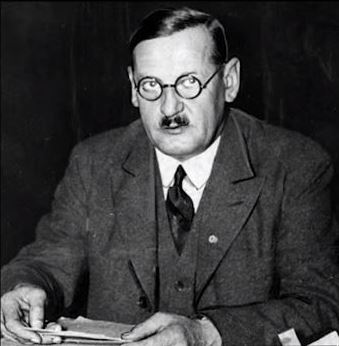
Anton Drexler (1884–1942) was a German political leader and one of the early founders of the National Socialist German Workers’ Party (NSDAP), which later became the Nazi Party under Adolf Hitler’s leadership. Though his role in the Nazi movement diminished over time, Drexler’s influence in the party’s formative years was significant. His political ideology and anti-Semitic views laid the groundwork for the party’s rise to power.
Early Life and Background
Anton Drexler was born on June 13, 1884, in Munich, Germany. He worked as a toolmaker and later as a railway locksmith, which connected him to the working-class communities in Germany. Drexler was deeply affected by the social and political upheavals in Germany following World War I, including the economic hardships and national humiliation imposed by the Treaty of Versailles.
His disillusionment with traditional political parties, combined with his nationalist and anti-Semitic beliefs, led him to seek alternative political solutions for Germany’s economic and social crises.
Founding of the German Workers’ Party (DAP)
In 1919, Drexler founded the German Workers’ Party (Deutsche Arbeiterpartei or DAP), a small, far-right, nationalist organization. The DAP sought to appeal to working-class Germans who felt disillusioned by the political establishment and were drawn to anti-Semitic and anti-Marxist rhetoric.
Key Beliefs:
- Anti-Semitism: Drexler and the DAP were openly anti-Semitic, blaming Jews for Germany’s economic and political woes.
- Nationalism: The party promoted extreme nationalism, advocating for a strong, unified Germany free from foreign influence.
- Anti-Marxism: Drexler and the DAP opposed Marxism, communism, and socialism, believing that these ideologies were harmful to German workers and the nation as a whole.
Adolf Hitler Joins the DAP
In September 1919, Adolf Hitler, then an army intelligence agent, attended a DAP meeting to observe the group on behalf of the military. Hitler was impressed by the ideas presented, particularly their nationalist and anti-Semitic positions, and he joined the DAP shortly after. Hitler’s oratory skills and ability to attract followers soon made him a prominent figure within the party.
Hitler’s Influence and Transformation of the Party
Hitler quickly became the party’s leading spokesperson and began transforming the DAP into a more structured political organization. Under Hitler’s influence, the party expanded its membership and reach. In 1920, Drexler and Hitler agreed to rename the party the National Socialist German Workers’ Party (NSDAP), or Nazi Party, in an effort to broaden its appeal by incorporating nationalist and socialist ideas.
Drexler’s Diminished Role in the Nazi Party
As Hitler rose in prominence, Drexler’s influence within the Nazi Party began to decline. Drexler was more of a political organizer and thinker, while Hitler’s charisma and public speaking skills made him a natural leader. By 1921, tensions between the two men had grown, and Hitler pushed Drexler out of the leadership.
Drexler’s Later Involvement
Though sidelined within the Nazi Party, Drexler remained involved in far-right politics in Germany. He served as an honorary president of the NSDAP for a brief period and later distanced himself from Hitler’s leadership, though he never fully renounced his earlier views.
Drexler’s political influence continued to wane as Hitler consolidated control of the Nazi Party and transformed it into a powerful political movement that would ultimately lead to the rise of the Third Reich.
Death and Legacy
Anton Drexler died on February 24, 1942, in Munich, largely forgotten by the time of his death. His early role in founding the DAP and laying the groundwork for the Nazi Party is often overshadowed by Hitler’s subsequent rise to power.
While Drexler did not play a central role in the Nazi regime, his ideas and organizational efforts were pivotal in the early development of the Nazi movement. Drexler’s legacy remains tied to his involvement in fostering an environment of nationalist, anti-Semitic, and anti-Marxist sentiments in post-World War I Germany—ideas that were later exploited by Hitler and the Nazi Party to disastrous effect.
Anton Drexler played an important but often overlooked role in the early development of the Nazi Party. Though his influence diminished as Adolf Hitler rose to power, Drexler’s establishment of the DAP and his nationalist, anti-Semitic ideology were foundational to the movement that would later lead to one of the most catastrophic periods in world history.