The Adamic language is a fascinating concept that emerges from religious and historical contexts. It refers to the language believed to have been spoken by Adam, the first man in religious tradition, particularly within Judaism, Christianity, and Islam. Some people view it as the original or perfect language, given directly by God, from which all other languages have evolved.
This concept has intrigued scholars, theologians, and linguists for centuries. Though there’s no concrete historical evidence of such a language, the idea holds deep symbolic meaning in religious traditions and has sparked countless debates about the origins of human communication.
What is the Adamic Language?
The Adamic language is often described as the first human language, spoken by Adam and possibly Eve, according to biblical stories. Many religious believers think that this was a divine language, uncorrupted and pure, enabling humans to communicate with God.
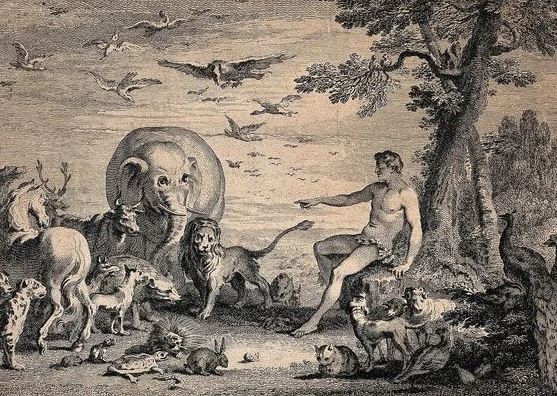
- In the Book of Genesis, Adam is tasked with naming the animals (Genesis 2:19-20). This action implies that Adam had a language, possibly a sacred one, to interact with creation.
- The idea that Hebrew might be the Adamic language was popular among early scholars due to its ancient roots and its status as the language of the Old Testament.
Religious Context and Significance
- Judaism and Christianity:
In both traditions, the Adamic language is considered the language spoken in the Garden of Eden, before sin entered the world. Some religious scholars believe that it was a perfect, unblemished language. As the language of the first humans, it symbolized a direct connection between humanity and God. - Islam:
In Islamic belief, Adam is regarded as the first prophet. While the specific language Adam spoke isn’t emphasized as much, the idea of an original divine language aligns with the Islamic view that God taught Adam knowledge directly, including the names of all things (Quran 2:31).
The Tower of Babel and Language Confusion
A key part of the Adamic language’s mythology is tied to the story of the Tower of Babel (Genesis 11:1-9). In this biblical account, humanity originally spoke one language, possibly the Adamic language, and attempted to build a tower to reach heaven. However, God intervened by confusing their language, resulting in the birth of multiple languages and scattering people across the Earth.
This event is often viewed as the moment when the purity of the Adamic language was lost, leading to the diverse range of languages we see today. It also symbolizes humanity’s separation from the divine.
Speculation and Historical Beliefs
Throughout history, scholars and thinkers have speculated about the existence of a primordial language:
- Medieval and Renaissance scholars often thought the Adamic language could hold divine secrets. Some even attempted to reconstruct it, believing that understanding this original tongue could bring humans closer to God.
- John Milton, in his epic poem Paradise Lost, describes Adam and Eve speaking a language in the Garden of Eden, though he does not specify what language it was. This reflects the broader fascination with the idea of a perfect, God-given language.
- Hebrew as the Adamic language: Due to its status as the language of the Old Testament, many religious scholars, especially in the Middle Ages, believed Hebrew was the original language spoken by Adam.
Modern Linguistic Perspective
In the modern study of languages, the Adamic language is viewed as a myth rather than a historical fact. Linguistics shows that languages evolve over time, influenced by social, cultural, and environmental factors. The idea of a single, universal language from which all others descended doesn’t fit with what we know about how languages develop.
However, the search for a universal language has always intrigued humans. Some linguists explore the idea of language universals, which are elements that all human languages share. While this is a scientific approach to understanding language, it mirrors the ancient curiosity about a common language spoken by early humans.
Symbolism of the Adamic Language
The concept of the Adamic language goes beyond just a story about words. It represents:
- Unity: A time when all humans were united in their speech.
- Purity: The belief that the original language was untainted by sin or corruption.
- Divine Connection: The idea that Adam’s language was a gift from God, allowing humans to communicate directly with the divine.
In religious traditions, the loss of this language symbolizes the broader loss of human closeness to God after the fall from Eden.
The Adamic language remains a compelling idea within religious mythology and cultural history. It symbolizes the idea of an original, pure form of human communication, given by God and lost over time. While modern linguistics doesn’t support the existence of such a language, the Adamic language continues to inspire curiosity about the origins of language and our desire to connect with the divine.
By understanding the significance of this concept, we gain insight into how humans have thought about language, unity, and communication throughout history.