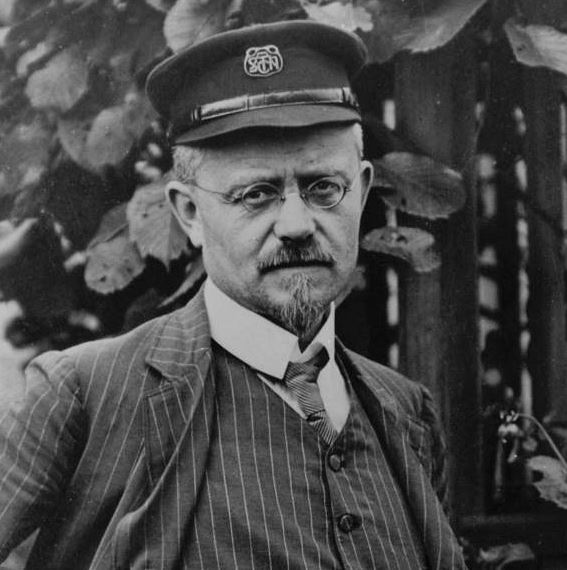
August Horch (1868–1951) was a German engineer and automobile pioneer best known for founding the companies Horch and Audi, two of the most prestigious automobile brands in Germany. His contributions to the early automotive industry, particularly in the areas of engineering and innovation, helped establish Germany as a global leader in automobile manufacturing.
Early Life and Education
August Horch was born on October 12, 1868, in Winningen, a small town near Koblenz in Germany. He studied engineering at the Technical College of Mittweida, where he gained a strong foundation in mechanical engineering, which would later influence his work in the automotive industry.
After completing his education, Horch worked for Carl Benz (founder of Mercedes-Benz) at Benz & Cie., where he gained practical experience in the emerging field of automobile design and manufacturing. He quickly developed a reputation for his innovative ideas and technical skills, especially in engine design and mechanical systems.
Founding of Horch & Cie.
1. Horch & Cie. (1899)
In 1899, August Horch founded his first automobile company, Horch & Cie. Motorwagen Werke, in Ehrenfeld, Cologne. The company’s first car, built in 1901, was notable for its advanced engineering, including a horizontally opposed engine that was quite innovative for the time. Horch focused on creating luxury vehicles, emphasizing high-quality construction and powerful engines.
However, his ambition and drive for innovation sometimes led to disagreements with the board of directors. These conflicts eventually led to Horch leaving the company he founded in 1909.
2. Horch Brand and Success
After Horch’s departure, Horch & Cie. continued as a successful luxury car brand, known for its reliability and technical excellence. Even without Horch, the company thrived and became one of Germany’s most prestigious car manufacturers, producing high-end automobiles for the elite.
Founding of Audi
1. Audi Automobilwerke (1909)
Following his departure from Horch & Cie., August Horch founded a new company in Zwickau in 1909. However, due to legal disputes over the use of his own name, Horch could not name the company after himself. Instead, he chose the name Audi, which is the Latin translation of “Horch,” meaning “listen” in German.
The newly founded Audi Automobilwerke GmbH (later Audi AG) quickly became known for its innovative designs, engineering prowess, and commitment to quality. Audi’s early vehicles, including the Audi Type A and Type B, were high-performance cars that gained popularity in motorsports, especially in racing competitions.
2. Technological Innovations
Under Horch’s leadership, Audi was known for several technological advancements, including the use of lightweight aluminum in engines and the development of left-hand steering, which improved visibility and maneuverability for drivers. Audi also became the first German car manufacturer to produce a six-cylinder engine in 1921, further establishing its reputation as a leader in automotive engineering.
The Four Rings: Formation of Auto Union
In 1932, Audi merged with three other German automobile manufacturers—Horch, DKW, and Wanderer—to form Auto Union AG. This new conglomerate, symbolized by the iconic four-ring logo (which represents the four founding companies), became one of Germany’s largest automobile manufacturers.
Although August Horch was no longer directly involved with the company at this point, his legacy was deeply intertwined with Auto Union, particularly through the continuing success of the Audi and Horch brands. Auto Union became known for producing high-performance racing cars, especially during the 1930s, and played a major role in the German automotive industry.
Later Life and Legacy
1. Honors and Retirement
After his retirement, August Horch remained a respected figure in the automotive industry. He continued to influence automotive design and was honored with numerous awards for his contributions to the development of the automobile. In 1949, the Technical University of Braunschweig awarded him an honorary doctorate for his lifelong achievements in engineering.
2. Death and Legacy
August Horch passed away on February 3, 1951, in Münchberg, Germany, leaving behind a legacy as one of the pioneers of the modern automobile. His vision and drive to push the boundaries of engineering helped create two iconic automotive brands—Horch and Audi—that continue to thrive today.
3. Audi’s Continued Success
After World War II, Auto Union eventually restructured, and the Audi brand was revived in the 1960s. Today, Audi AG is a leading luxury automobile manufacturer, renowned for its cutting-edge technology, design, and performance. The company’s continued success is a testament to August Horch’s innovative spirit and lasting influence on the automotive industry.August Horch
August Horch was a visionary engineer whose contributions to the early automobile industry helped shape the future of car manufacturing in Germany. By founding both Horch and Audi, Horch played a pivotal role in establishing the reputation of German engineering excellence. His innovations in car design, performance, and manufacturing continue to influence the global automobile industry today, and his legacy lives on through the iconic brands he created.