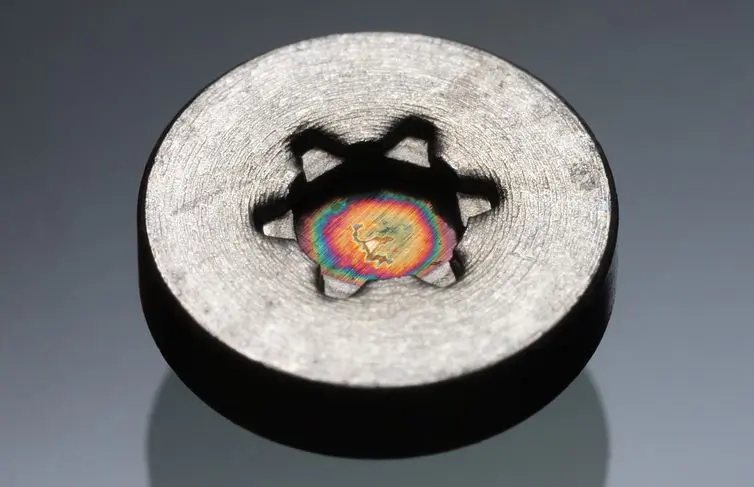
Americium is a fascinating element with a range of applications and significant properties. As part of the actinide series in the periodic table, Americium plays a crucial role in various fields, from scientific research to practical applications in everyday life. This article provides a comprehensive overview of Americium, including its characteristics, uses, and safety considerations.
What is Americium?
Americium is a synthetic radioactive element with the symbol Am and atomic number 95. It is part of the actinide series, which includes other heavy elements such as uranium and plutonium. Discovered in 1899 by Albert Ghiorso, Ralph A. James, and Leon O. Morgan, Americium was named after the Americas, reflecting its position as the first element discovered in the Americas.
- Chemical Properties: Americium is a soft, silvery-white metal that is chemically reactive. It tarnishes slowly in air, forming a layer of americium oxide on its surface.
- Physical Properties: It has a density of about 13.67 grams per cubic centimeter and melts at approximately 1,176°C (2,149°F). Its physical properties are similar to those of other actinides, such as plutonium and curium.
Production of Americium
Americium is not found naturally in significant quantities; instead, it is produced artificially in nuclear reactors. The primary method of production involves irradiating plutonium-239 with neutrons, leading to the formation of Americium-241, one of its most common isotopes.
- Nuclear Reactors: Americium is produced in nuclear reactors through neutron capture reactions. Plutonium-239 is bombarded with neutrons, and through a series of nuclear reactions, Americium-241 is formed.
- Isotopes: The most common isotopes of Americium are Americium-241 and Americium-243. Americium-241 is used in various applications, while Americium-243 is primarily used for research purposes.
Uses of Americium
Americium has several important applications across different fields. Its unique properties make it valuable in both scientific research and practical applications.
- Smoke Detectors: One of the most well-known uses of Americium is in smoke detectors. Americium-241 is used in ionization smoke detectors to detect smoke particles in the air. The radioactive isotope emits alpha particles, which ionize the air in the detector chamber. When smoke enters the chamber, it disrupts the ionization process, triggering the alarm.
- Medical Applications: Americium-241 is used in certain medical procedures, including cancer treatment and diagnostic imaging. It is employed in radiation therapy to target and destroy cancer cells. Additionally, Americium is used in some types of imaging equipment, such as gamma cameras, to diagnose medical conditions.
- Industrial Applications: Americium is used in industrial applications for radiography and thickness measurements. In industrial radiography, Americium sources are used to inspect welds and materials for structural integrity. In thickness gauges, Americium is employed to measure the thickness of materials in manufacturing processes.
- Scientific Research: Americium is used in scientific research to study the properties of heavy elements and to investigate nuclear reactions. Researchers use Americium-243 in various experiments to explore the behavior of actinides and to develop new technologies.
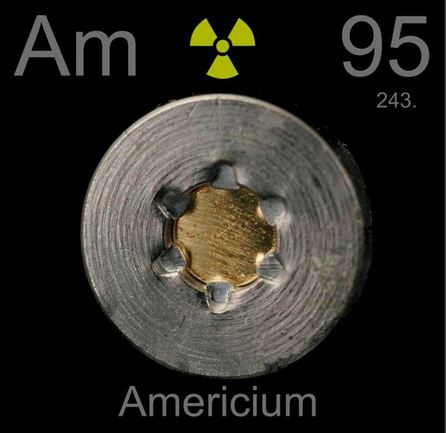
Safety and Handling
Given its radioactive nature, Americium requires careful handling and safety precautions to prevent exposure and contamination.
- Radiation Exposure: Americium-241 emits alpha particles, which have low penetration power and can be stopped by a sheet of paper or skin. However, if Americium is ingested or inhaled, it can be harmful due to its radioactive properties. Proper shielding and safety measures are essential to minimize exposure.
- Containment: Americium sources are typically sealed in metal containers to prevent leakage and contamination. Handling of Americium should be done using protective equipment, such as gloves and masks, to avoid direct contact and inhalation of radioactive particles.
- Disposal: Disposal of Americium must be carried out according to strict regulatory guidelines. It is classified as a hazardous material and requires specialized disposal methods to ensure safe and environmentally responsible handling.
Environmental Impact
Americium’s environmental impact is closely linked to its use and disposal. While it has valuable applications, its radioactive nature poses potential risks to the environment if not managed properly.
- Contamination Risks: Improper disposal of Americium-containing materials can lead to environmental contamination. It is crucial to follow regulatory guidelines for the safe disposal of radioactive waste to prevent contamination of soil and water.
- Regulatory Oversight: Various national and international regulations govern the use, handling, and disposal of Americium to minimize its environmental impact. Organizations such as the Environmental Protection Agency (EPA) and the International Atomic Energy Agency (IAEA) set standards and guidelines for the safe management of radioactive materials.
Future Developments
Research into Americium continues to advance, with ongoing studies focused on improving its applications and understanding its properties.
- New Applications: Scientists are exploring new uses for Americium in fields such as nuclear medicine, materials science, and environmental monitoring. Advances in technology may lead to more efficient and innovative applications of Americium.
- Safety Improvements: Researchers are also working on enhancing safety measures for handling and disposing of Americium. Improved containment technologies and waste management practices are being developed to reduce risks associated with its use.
Americium is a remarkable element with diverse applications in smoke detection, medical treatments, industrial processes, and scientific research. Its unique properties, combined with its radioactive nature, make it both valuable and challenging to handle. Understanding Americium’s uses, safety considerations, and environmental impact is essential for maximizing its benefits while minimizing potential risks.
As research and technology continue to evolve, Americium will likely play an increasingly important role in various fields, contributing to advancements in science, medicine, and industry.