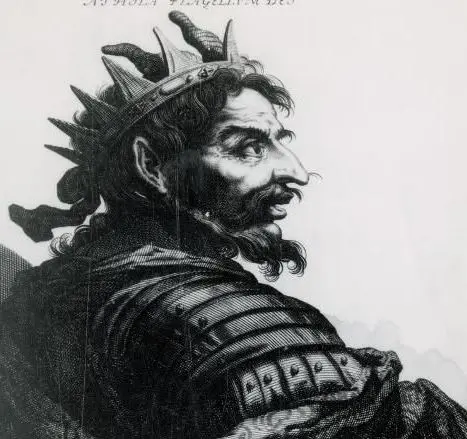
Attila the Hun is one of history’s most infamous leaders, known for his fierce conquests and the terror he inspired across Europe during the 5th century. Often called the “Scourge of God,” Attila led the Huns in a series of campaigns that reshaped the geopolitical landscape of his time. In this article, we’ll explore who Attila was, his rise to power, his military strategies, and his lasting impact on history.
Early Life and Rise to Power
Attila was born around 406 AD into the Hunnic royal family. The Huns were a nomadic people of Central Asia, feared for their horsemanship and warfare skills. Little is known about Attila’s early life, but he ascended to power in 434 AD, alongside his brother Bleda, after the death of their uncle, King Rugila.
Initially, Attila and Bleda ruled jointly, but this partnership didn’t last long. By 445 AD, Attila had allegedly murdered Bleda, making himself the sole ruler of the Huns. This marked the beginning of his reign of terror across Europe.
The Hunnic Empire
Under Attila’s leadership, the Huns became one of the most powerful forces in Europe. Attila transformed the Hunnic Empire into a formidable military power, with his rule extending from the Ural River to the Rhine, and from the Danube to the Baltic Sea.
Attila’s empire was not built on permanent settlements or advanced infrastructure but on the mobility and fighting prowess of his warriors. The Huns were masters of horseback warfare, using swift and brutal raids to strike fear into their enemies. Their composite bows, which could shoot arrows at great distances, were particularly feared by their adversaries.
Military Campaigns and Tactics
Attila’s military campaigns are legendary. He led numerous invasions into the Eastern and Western Roman Empires, extracting enormous tributes and spreading fear wherever he went.
- Invasion of the Eastern Roman Empire (441-443 AD): Attila first targeted the Eastern Roman Empire, launching devastating raids in the Balkans. The Romans, unable to resist his onslaught, were forced to pay a hefty annual tribute to the Huns.
- Invasion of Gaul (451 AD): One of Attila’s most famous campaigns was his invasion of Gaul (modern-day France). The Roman general Flavius Aetius, along with his allies, including the Visigoths, managed to halt Attila’s advance at the Battle of the Catalaunian Plains. Although not a decisive defeat, it was one of the few times Attila was stopped in his tracks.
- Invasion of Italy (452 AD): Following his setback in Gaul, Attila turned his attention to Italy. He sacked several cities in northern Italy, including Aquileia, which was so thoroughly destroyed that it was said to have “disappeared from the earth.” However, a combination of famine, disease, and a diplomatic mission led by Pope Leo I persuaded Attila to retreat, sparing Rome from his wrath.
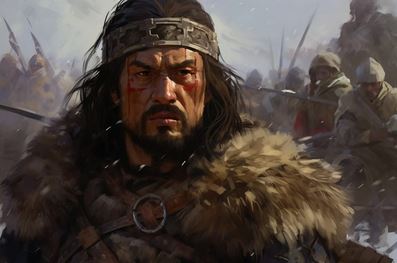
Attila’s tactics were often psychological as much as they were physical. His reputation for brutality preceded him, causing cities and armies to surrender without a fight, fearing the destruction that would follow resistance.
Death and Legacy
Attila’s death in 453 AD was sudden and mysterious. He died on his wedding night, possibly from a severe nosebleed or choking, although some speculate he was assassinated. His death marked the beginning of the decline of the Hunnic Empire, which quickly fragmented as his sons fought for power.
Despite the short-lived nature of his empire, Attila’s legacy endured. He became a symbol of barbarian terror in European history, often depicted as a ruthless and bloodthirsty leader. In medieval European literature, Attila was portrayed as a monster, reinforcing the fear he inspired during his lifetime.
However, modern historians have sought to provide a more balanced view of Attila. While acknowledging his brutal tactics, they also recognize his skills as a leader and strategist who unified the Huns and led them to become one of the most feared powers in Europe.
Attila in Popular Culture
Attila’s name has become synonymous with chaos and destruction. He has appeared in numerous works of literature, film, and television, often depicted as the archetypal barbarian leader. His life has inspired countless stories, ranging from historical dramas to more fantastical interpretations.
In many ways, Attila has become a larger-than-life figure, embodying the fear and fascination that the Huns generated in the Roman world. His enduring presence in popular culture reflects the lasting impact he had on the collective memory of Europe.
Attila the Hun was a figure of immense power and influence, whose campaigns left a lasting mark on European history. Known for his ruthless military strategies and the fear he instilled in his enemies, Attila’s legacy is a complex one. He was both a feared barbarian and a shrewd leader, capable of uniting the Huns into a force that challenged the might of Rome.